How Duncan Aviation Plans Hangar Stacks Across Three MRO Facilities
Replacing a stretched general-purpose drawing workflow with purpose-built MRO planning gets technicians onto aircraft faster.
"It means we can get people with wrenches in their hands on the airplane faster, and that's how we keep our production shops efficient."
Brian Burke, Operations Planning Specialist, Duncan Aviation
~50%
Less Time Planning Hangar Stacks
Brian Burke, Operations Planning Specialist
3
Full-Service MRO Facilities Using AirPlx
5–10 min
To Working Knowledge of the Software
Three Facilities, One Planning Tool
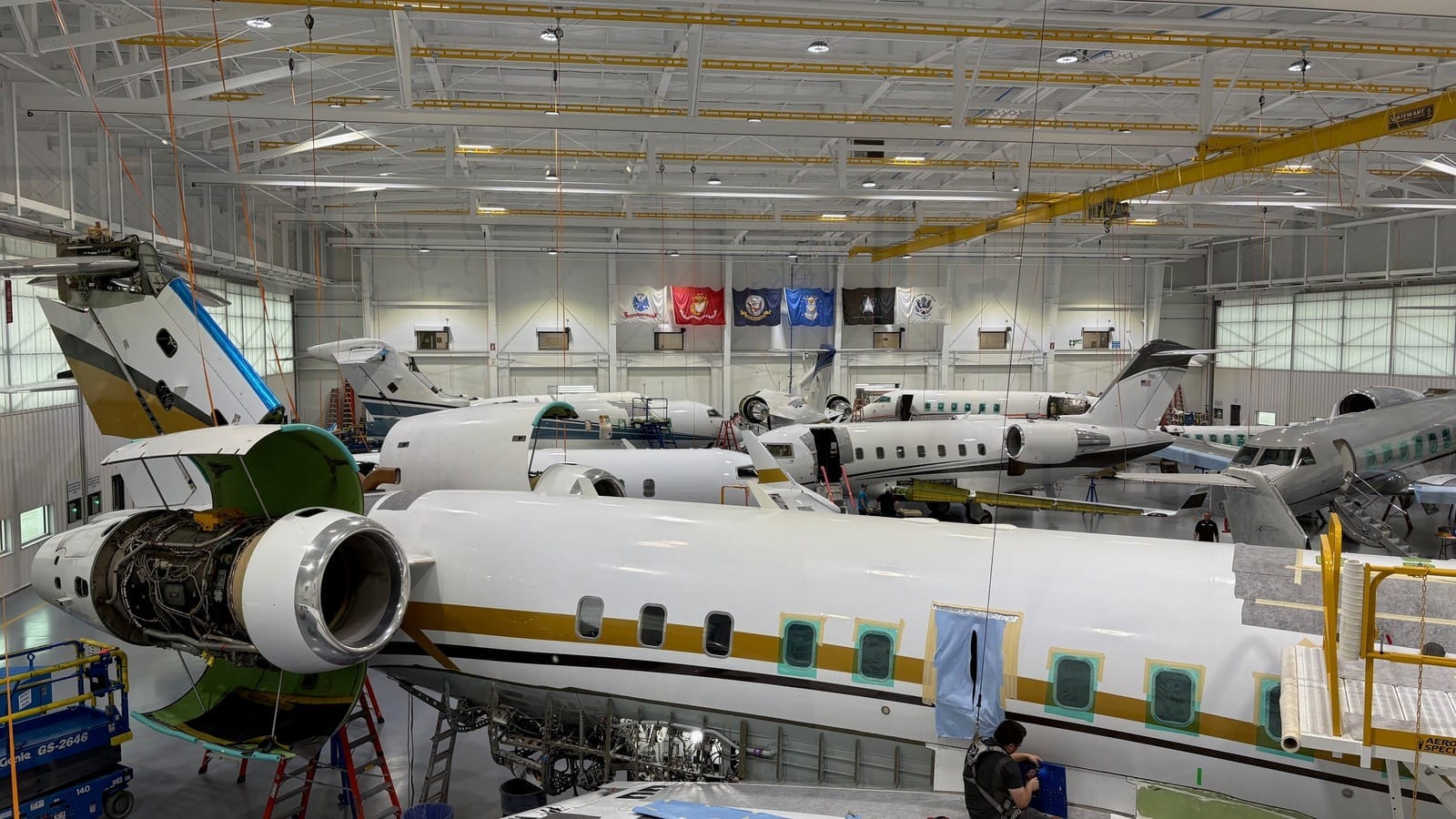
Duncan Aviation is the world's largest privately owned business jet service provider, and a full business aviation MRO: airframe and engine work, paint, interiors, and the back shops behind all of it. AirPlx is in use across its three MRO facilities, in Lincoln, Nebraska; Battle Creek, Michigan; and Provo, Utah. This story comes from Battle Creek, which at the time of our conversation was days away from what Matt Smith, its FBO services manager, called 100% AirPlx, 100% of the time.
Aircraft do not arrive in the evening and leave in the morning. They come in for scheduled work and sit while the shop works through it, sometimes for weeks, which makes the hangar a harder problem than it is at an FBO. Battle Creek had been planning all of it in a drawing program never meant for the job.
The Stack That Proved It
Brian Burke had been deliberately cautious with AirPlx. He gave himself a buffer rather than planning to the inch. Then a stack came up that did not leave room for one: several aircraft had to fit together a specific way and be towed into place in a specific order.
He built the whole move in AirPlx first, every tow path and every clearance, before the team attempted it on the floor. Then they went and did it.
"The tow paths, the fit, everything was just spot on. That was a big confidence booster."
Brian Burke
Operations Planning Specialist, Duncan Aviation
One stack worked, and it changed how tightly he is willing to plan the next one.
What an MRO Needs That an FBO Does Not
An FBO stack has to fit tonight and come apart in a sensible order tomorrow. An MRO stack has to hold for weeks. It works around equipment, around aircraft that are in pieces, and around work that has to stay reachable the entire time.
Accurate aircraft models and tow simulation let Duncan test wings-under-tails arrangements, tight clearances and the sequence required to tow each aircraft into place before anything moves. That interlock only works if the dimensions are right and the path in is real, which is the difference between a diagram of a hangar and a plan for one.
The floor is less fixed than you might expect, too. Duncan leased another hangar on the field at the beginning of the year and leases space case by case for individual airplanes on top of that. As it adds, leases or temporarily uses space, the team can update the operating picture without rebuilding its planning files.
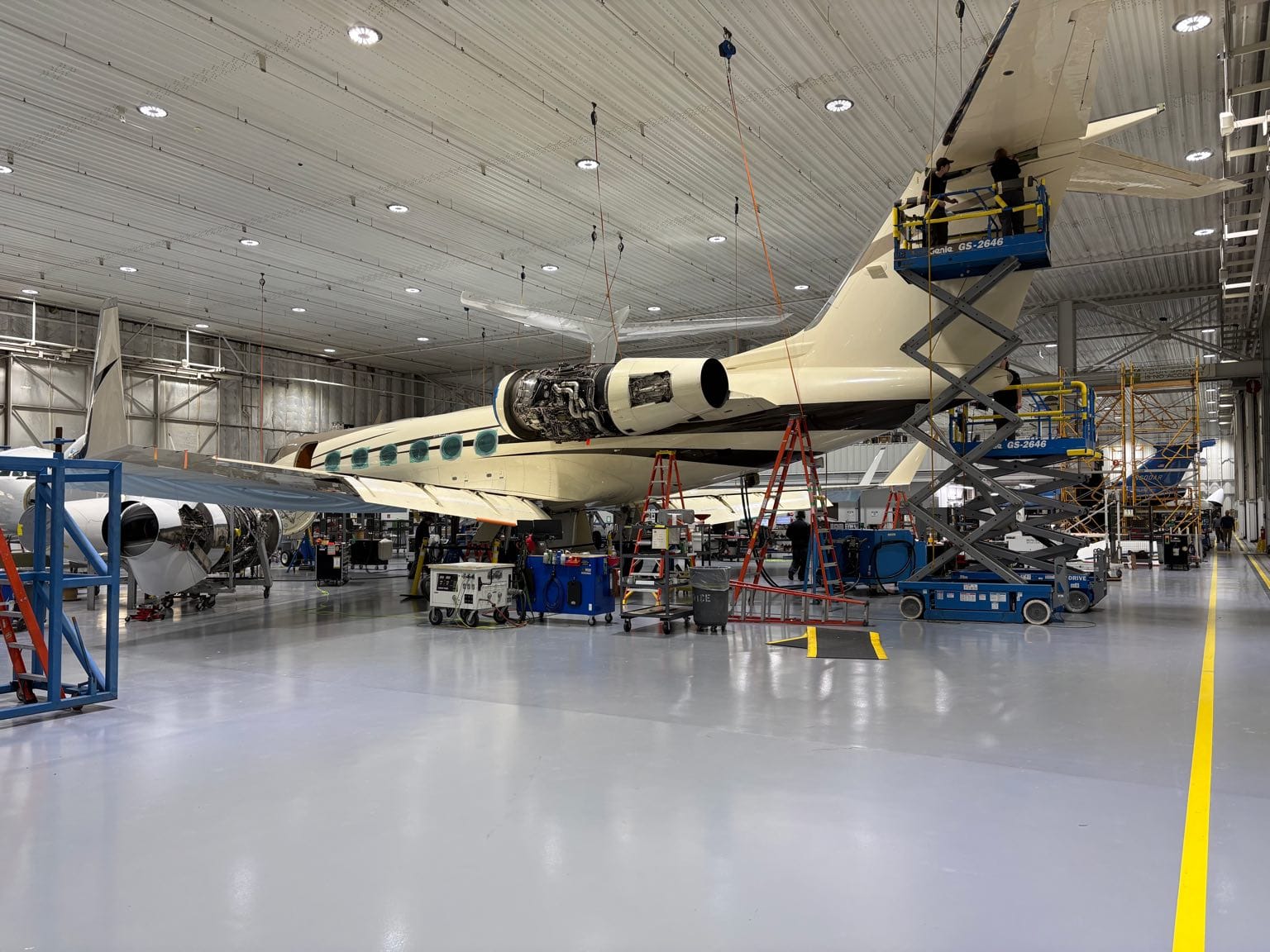 Lifts at the tail, an engine in pieces, stands and carts around the nose. An MRO stack has to leave room for the work, not just for the airplane.
Complex Planning in a Tool That Was Not Built for It
None of that planning was crude. Duncan's team had built a sophisticated process inside a general-purpose diagramming tool, accurate enough to run the floor from and detailed enough to hand to a crew. The process worked, but the tool fought them.
Every new scenario required another copy of the file. Saving could take up to ten minutes, and sometimes the application crashed on the way.
What Duncan wanted was not a better way to draw a hangar, but one place where the drawing, the aircraft dimensions, the tow paths and the current state of the floor all lived together.
Much of what Duncan had spent that effort reproducing by hand was already built into AirPlx.
Brian was being shown a competing hangar-planning product at the same time. It would not have saved him any time over what he already had, he says: it was clumsy, and it took a lot of training just to find things in it.
"It's been a huge upgrade. It's hard to overstate that."
Brian Burke
Operations Planning Specialist, Duncan Aviation
Half the Planning Time, and What It Buys
The saving Brian describes is his own, not a number for the company. What he is measuring is his piece of the work: building the hangar stack the floor should end the day in, and the one after that.
"AirPlx has cut my hangar-planning time in half."
Brian Burke
Operations Planning Specialist, Duncan Aviation
In an MRO, the time a planner gets back does not stay with the planner. Plans reach the team sooner, and the crews waiting on those plans start sooner.
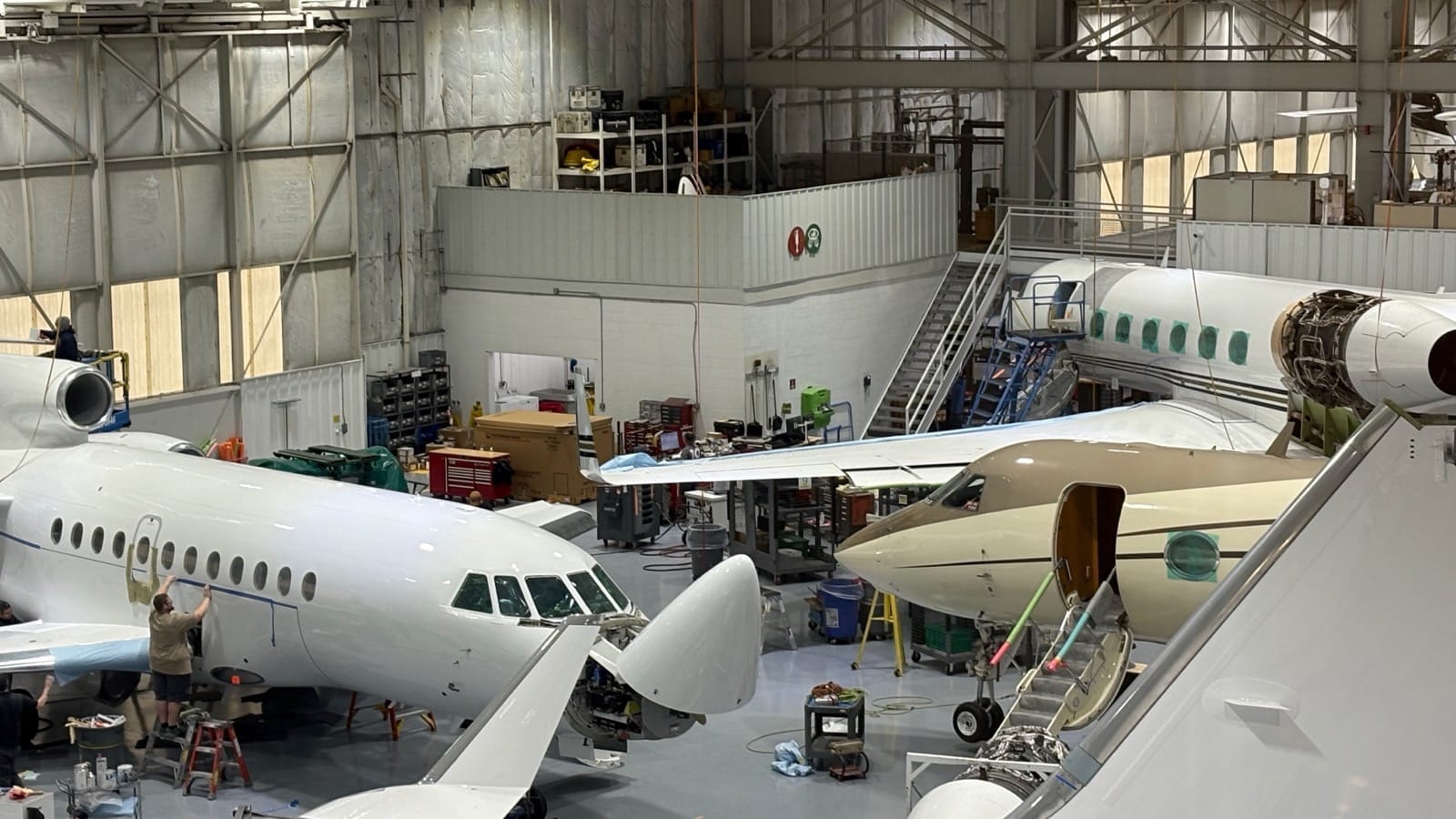 The end of the chain. Planning time saved upstream is crew time on the aircraft.
At 98% Full, Can We Still Take the Job?
One use case nobody planned for is how AirPlx informs the sales conversation. Brian keeps a test profile in it, sits down with the people who sell Duncan's hangar and labor space, and puts a blank hangar on a TV.
What they are testing is a hypothetical: whether another project can fit when the hangars are already nearly full. Brian builds the mix of aircraft already committed, then tries the new one against it.
"We're at 98% full, but we've got this opportunity on a really good project. Is there a way we could make this work?"
Brian Burke
Operations Planning Specialist, Duncan Aviation
Sometimes the answer is yes and the stack shows how. Sometimes it is no, and that is worth knowing before anyone promises a customer a slot.
The same thing shows up in smaller questions all day. Alex Carpia, Duncan's hangar coordinator, says the team gets answers back to people a lot quicker than it could before.
Five to Ten Minutes to Working Knowledge
Duncan rolled AirPlx out to team leaders and LSRs, the people out there moving the airplanes, towing and fueling, and the ones who keep the current hangar map right. AirPlx accounts went live, and most people did not wait for training.
Brian estimates that most team members can reach a working knowledge of AirPlx in five to ten minutes, including the ones who had been apprehensive about leaving the existing process. The walkthrough is short by design: here is how you log in, here is the map you are using, here is how you add an airplane and how you remove one.
Training, Safety and Risk
For Matt Smith, that showed up somewhere he was not expecting: in how new team members learn to move aircraft. Tow limits and tow paths sit in the plan before anyone touches a tug, which gives a new hire something to learn from.
"AirPlx is improving how we train new team members to tow aircraft, which improves safety and helps us mitigate risk."
Matt Smith
FBO Services Manager, BTL/AZO, Duncan Aviation
One Picture, Three Facilities That Run Their Own Way
Duncan's locations are on the same tool, not the same playbook. Each one stacks its hangars its own way, and the schedulers meet every other week to trade the things worth trading: a vendor quoting longer landing gear turn times, a part that will not be back when someone assumed.
What they do share is the view itself. Base view is where Brian spends most of his planning day: it gives him the whole campus at once instead of one hangar at a time.
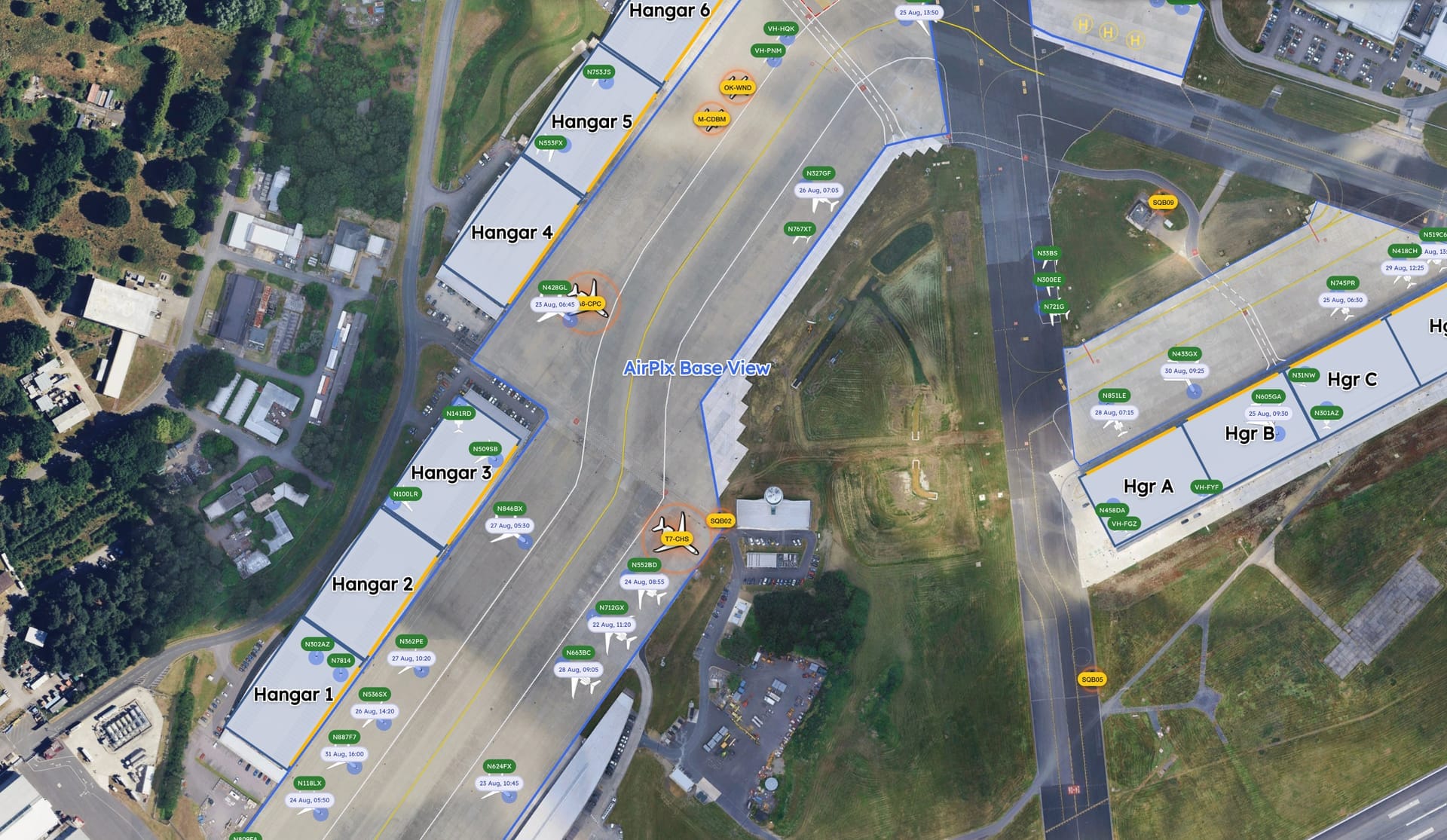 Base view on a demonstration base: every hangar and ramp on one map, each aircraft labeled with its tail number and the time it last moved.
Printed layouts go up on Duncan's company intranet several times a day: the current map, and the stack the hangar should end the day in. The audience is wider than the hangar team. A crew hauling seats down for an interior install checks which hangar the aircraft is in, and other locations look to see how full a hangar is. How many people read those layouts, and how many different reasons they have for reading them, has surprised Duncan's own planners.
The Support Behind the Software
Features Duncan asks for tend to show up. The print layouts its intranet workflow runs on were built for that job, and so were the labeling options Alex uses to mark up a stack. Alex Carpia saw the premise early, and says it was watching Duncan's own ideas turn into features that convinced him the product would go somewhere.
"The support is the other half of the picture. It's fast, it's available. That was a big factor for us."
Brian Burke
Operations Planning Specialist, Duncan Aviation
For an MRO, hangar planning is not a nightly puzzle. It is the schedule the whole shop works against. Duncan was already good at it. AirPlx gave its team a faster way to do it, a better way to test the hard stacks, and more confidence when the margins get tight.
Back to Customer Stories
Battle Creek, MI
Business Aviation MRO
Key Facts
Airports
KLNK, KBTL, KPVU
MRO Facilities
Lincoln, Battle Creek, Provo
Founded
1956, family-owned
Users
Team leaders, LSRs, schedulers
Work Type
Airframe, engine, paint, interiors