What Is an FBO? The Ground-Level Guide to Fixed Base Operators
Published on April 1, 2025 • 5 min read
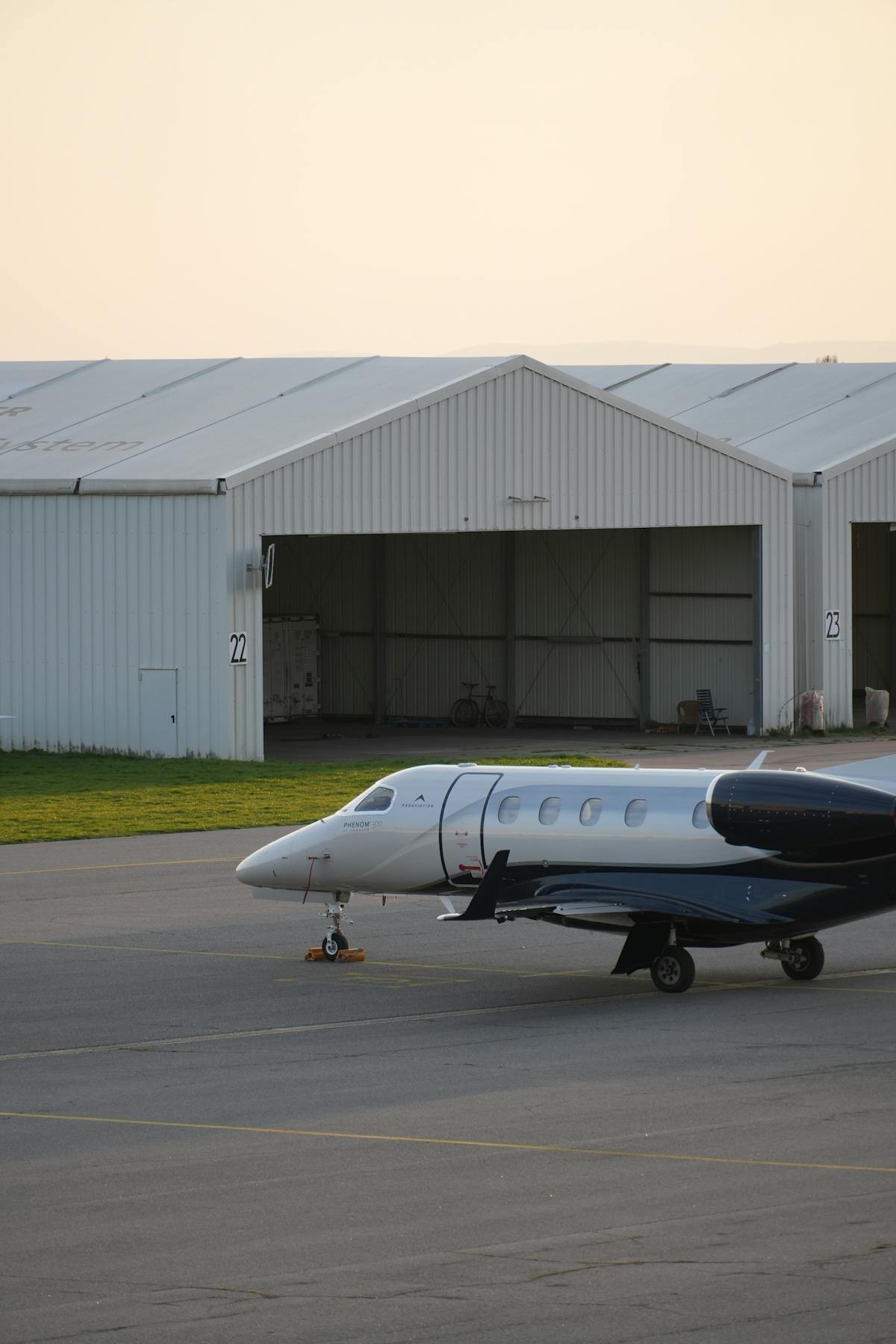
You land at a general aviation airport. Someone marshals your aircraft to a parking spot, hooks up ground power, and offers you a cold bottle of water before you even reach the lobby. That someone works for the FBO.
FBO stands for Fixed Base Operator. The FAA defines it as "a commercial entity providing aeronautical services such as fueling, maintenance, storage, ground and flight instruction, etc., to the public." In plain English: an FBO is the company that keeps an airport running for everyone who is not flying commercial.
That definition is accurate. It is also wildly incomplete. From our work building hangar optimization software for FBOs across the country, we have seen that the real job description is closer to: logistics company, fuel distributor, real estate operator, hospitality provider, and aircraft Tetris champion, all running simultaneously on a 24-hour clock.
Where the Name Comes From
The term dates back to 1926. Before that, civil aviation in the U.S. was dominated by barnstormers, transient pilots who flew surplus World War I aircraft from town to town, landing in farm fields and charging whatever locals would pay for a ride.
The Air Commerce Act of 1926 changed everything. New requirements for pilot licensing, aircraft maintenance standards, and training regulations forced those roaming operations to settle down. Pilots and mechanics who had been living on the road started setting up permanent shops at airports. These businesses were called "fixed base" operations to distinguish them from the barnstorming era's traveling shows.
A hundred years later, the name stuck.
See how many aircraft fit in your hangar
AirPlx calculates optimized 3D stacking layouts for your exact hangar dimensions.
Run a free layout simulationWhat Services Does an FBO Provide?
FBOs vary wildly in size and scope. A small-town FBO might be one building with a fuel pump and a vending machine. A major FBO at Teterboro or Van Nuys might have multiple hangars, a full-service lounge, and a concierge who can book your dinner reservation.
Here is the core service list, roughly ordered by revenue contribution:
Fuel sales. This is the big one. FBOs sell Jet-A (for turbine aircraft) and avgas (for piston aircraft). The FBO buys wholesale from suppliers like Avfuel or World Fuel Services, then marks it up. A typical mid-size jet burns 200-400 gallons on a fuel stop. At a $2-4/gallon margin, that is $400-1,600 per visit from fuel alone.
Hangar storage. Aircraft owners pay monthly or nightly fees to keep their planes inside. Rates depend on the aircraft size and airport location. A T-hangar for a single-engine Cessna might cost $400/month at a rural airport. A spot for a G650 at a major metro FBO can run well north of that. According to AOPA, 71% of GA airports report hangar waitlists, which tells you everything about the supply-demand imbalance.
Line services. This covers everything the ground crew does: marshaling, towing, de-icing, lavatory servicing, GPU (ground power unit) hookups, and pre-heating in cold weather. Line service technicians are the backbone of any FBO operation.
Ground handling and passenger services. Larger FBOs provide crew cars, rental car coordination, hotel bookings, catering arrangements, customs processing for international flights, and lounge access. High-end FBOs compete on these amenities the way hotels compete on thread count.
Maintenance and MRO. Some FBOs operate FAA-certified repair stations on-site, handling everything from oil changes to avionics upgrades. Others partner with independent maintenance shops that lease space on the field.
Flight training and aircraft rental. Smaller, GA-focused FBOs often run flight schools and rent out training aircraft. This is where many pilots get their start.
 Hangar storage is one of the most profitable services an FBO can offer. 71% of GA airports report waitlists.
How Do FBOs Make Money?
The textbook answer is fuel margins. That is true, but it is also the answer that causes the most strategic mistakes.
An FBO buys Jet-A at wholesale (roughly $3-5 per gallon, depending on location and volume contracts) and sells it at retail. The spread between those two numbers is the fuel margin. At a busy FBO, fuel can account for 50-70% of total revenue. But fuel is also the line item most exposed to price competition, contract fuel programs, and volume discounts that erode margins.
Hangar rental is where the real leverage is. Hangars produce consistent, recurring revenue with relatively low operating costs once built. The problem: hangar space is finite. An FBO with 100,000 square feet of hangar cannot magically add more when demand spikes.
We ran 48 controlled layout experiments inside AirPlx on a typical 150x155 ft hangar, testing 18 stacking strategies per configuration. The result: the difference between the worst-case and best-case layout in the exact same hangar was up to 3 additional aircraft. That is the gap between "we're full" and "send them over."
A single additional mid-size jet per week generates roughly $124,800 in annual revenue when you add up fuel, ramp fees, auxiliary services, and secondary spend. The FBOs that understand this do not just sell fuel. They treat every square foot of concrete like the revenue-generating asset it is.
Beyond fuel and hangars, FBOs generate revenue from:
- Ramp fees and handling fees (often waived with minimum fuel purchases)
- Infrastructure fees passed through from the airport authority
- Tenant rent from maintenance shops, charter operators, or flight schools leasing space
- Retail and concessions (pilot shops, snack bars, conference rooms)
The business model is essentially a real estate play combined with a fuel distribution business. FBOs lease land from the airport (they almost never own it), build or maintain facilities on that land, and monetize the traffic flowing through.
The Operational Reality: What Keeps FBO Managers Up at Night
The brochure version of running an FBO sounds straightforward: sell fuel, rent hangars, take care of customers. The reality is a nonstop juggling act. Here are the problems we hear about most from FBO operators:
The overnight hangar shuffle. A dozen transient jets land between 5 PM and midnight. Half of them want hangar space. Your line crew has to figure out which aircraft to pull out, which to stack, and how to arrange everything so the 6 AM departure can actually get out without moving four other planes first. This is Tetris with $30 million game pieces. When we modeled this problem in AirPlx, we found that stacking strategy alone accounts for a 20-25% difference in how many aircraft fit in the same hangar.
Transient demand forecasting. You cannot stock shelves like a grocery store. Demand shows up with 30 minutes of notice, and it varies wildly by day of week, time of year, and what events are happening in your city. A major sporting event or industry conference can double your normal traffic overnight. The FBOs that handle this well are the ones that have a plan for their hangar before the rush starts.
Seasonal capacity crunches. If your FBO is in South Florida, your winter season is a completely different business than your summer. Snowbird traffic can overwhelm ramp and hangar capacity for months at a time. The same dynamic plays out in reverse for FBOs near summer resort destinations.
Aircraft are getting bigger. Business jets have been growing steadily for two decades. The wingspan on a Gulfstream G700 is 103 feet, roughly the same as a Boeing 737. FBOs built in the 1990s were designed for Learjets and King Airs. Now they are trying to fit aircraft that keep getting larger into the same footprint.
Staffing. Line service technicians are hard to find and harder to keep. The work is physically demanding, the hours are unpredictable, and the pay historically has not matched the responsibility of moving $50 million aircraft around a crowded ramp. FBO staffing challenges are one of the industry's most persistent problems.
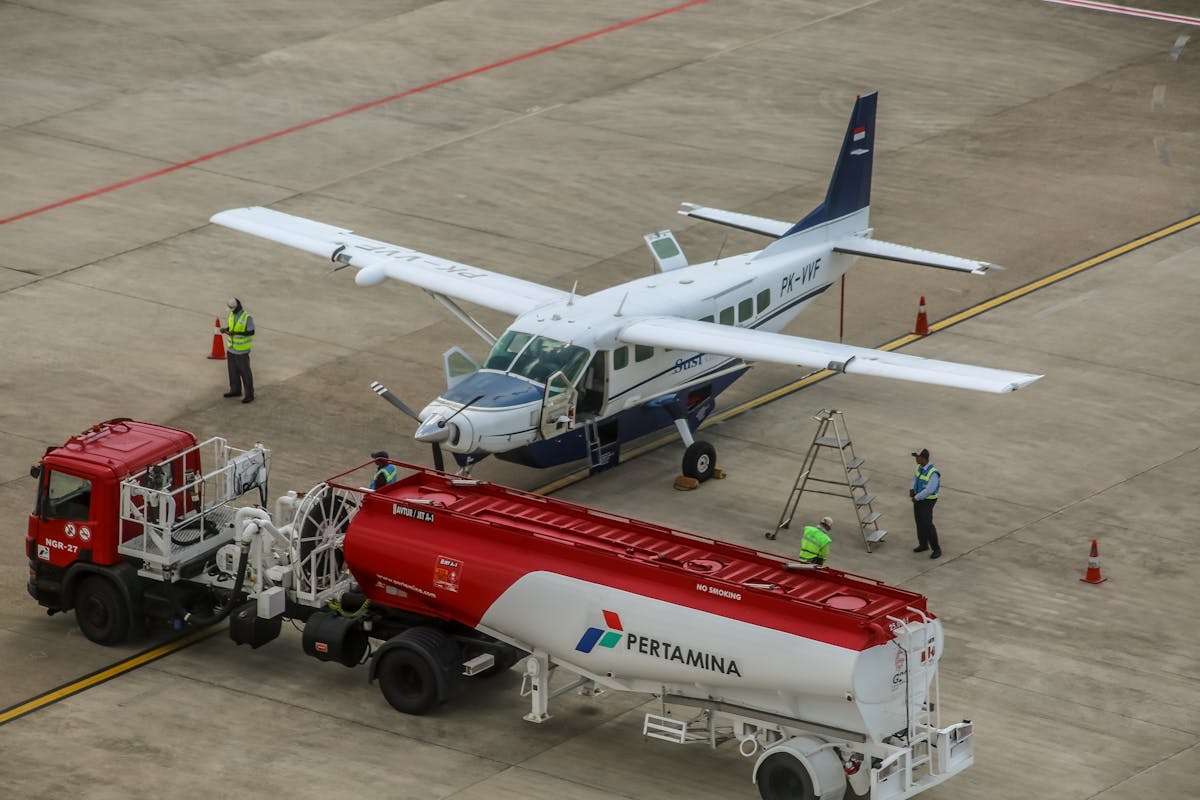 Fuel sales drive the top line, but operational efficiency determines what actually hits the bottom line.
What Separates Top-Performing FBOs
From our work with FBOs of all sizes, a pattern has emerged. The best operators do not just have nicer lobbies. They are better at a few specific things:
They know their real capacity. Most FBOs estimate hangar capacity based on a whiteboard sketch or tribal knowledge. The top performers have measured it. They know exactly how many aircraft they can fit in each configuration and which stacking arrangement works for which fleet mix. When we run hangar capacity analyses, operators are often surprised to find they have 15-25% more capacity than they thought.
They treat hangar space like a perishable good. An empty hangar bay tonight is revenue that is gone forever. The best FBOs actively manage their hangar like a hotel manages room inventory: tracking arrivals and departures, pre-planning layouts for known overnights, and having contingency plans for unexpected transients.
They invest in their line crews. The FBOs with the lowest incident rates and highest customer satisfaction scores are almost always the ones that take training seriously. Ground damage from a wingtip strike averages $50,000-$500,000 to repair. One incident can wipe out months of profit.
They track the right metrics. Fuel gallons pumped is the obvious one. But the operators who consistently outperform also track: hangar utilization rate, revenue per square foot, transient capture rate (what percentage of flyovers actually land), and customer return rate.
How Big Is the FBO Industry?
According to a survey by Aviation Resource Group International (ARGI), there are approximately 3,000 FBOs in the United States. That number has been gradually declining from roughly 3,350 in 2006, driven by consolidation and rising operational costs.
The industry is represented nationally by the National Air Transportation Association (NATA), with additional representation from the National Business Aviation Association (NBAA) and the Aircraft Owners and Pilots Association (AOPA).
General aviation itself is a bigger economic force than most people realize. According to AOPA, GA contributes more than 1% of U.S. GDP and supports approximately 1.3 million jobs. There are over 5,200 public-use airports in the country, but only about 560 serve scheduled airline flights. The rest are GA airports, and nearly all of them depend on at least one FBO to function.
The biggest industry story of the past decade has been consolidation. The two largest networks:
| Operator | Approximate Locations | Notable |
|---|---|---|
| Signature Aviation | 200+ worldwide | Acquired for $4.7B in 2021 by Blackstone, GIP, and Cascade Investment |
| Atlantic Aviation | 100+ in North America | Merged with Ross Aviation in 2020 |
Signature's 2015 acquisition of Landmark Aviation for $2.1 billion was described by Flight International as "the largest acquisition in the history of the business aviation services industry." Private equity sees FBOs as attractive assets because of their recurring revenue, high barriers to entry (airport leases are limited), and the long-term growth trajectory of business aviation.
For independent FBOs, the consolidation wave is both a threat and an opportunity. The big chains compete on network scale and brand recognition. Independents compete on service quality, local relationships, and operational flexibility. Many of the highest-rated FBOs in the country are single-location operators who know every based tenant by name.
What Most People Get Wrong About FBOs
"It's just a gas station for airplanes." This is the most common misconception. Yes, fuel is the largest revenue line. But FBOs are complex operations that combine logistics, real estate, hospitality, and safety-critical ground handling. The margin on fuel is thin. The margin on the total customer experience (fuel + hangar + services) is where the business actually works.
"More square footage = more revenue." We proved this wrong with data. Our hangar dimension study showed that capacity unlocks in steps, not smooth curves. Adding 20 feet in the wrong direction can produce zero additional aircraft capacity. Adding 5 feet in the right direction can unlock an entire additional jet.
"Hangars are just storage." For the best FBOs, hangars are the highest-margin revenue center in the business. The operators who treat hangar space as a strategic asset (actively managed, optimized for fleet mix, and planned in advance) consistently outperform those who treat it as a parking lot.
"Technology doesn't matter in this business." The FBO industry has been slower to adopt software than most service industries. But the operators who are pulling ahead are the ones using data to make decisions about hangar layouts, pricing, staffing, and capacity planning rather than relying on gut feel and whiteboard sketches.
The Bottom Line
An FBO is the service provider that makes general aviation work. It sells fuel, stores aircraft, handles ground operations, and takes care of passengers and crews. The industry runs on fuel margins and hangar rent, and it is consolidating fast.
But the definition only tells you what an FBO is. What matters more is how well it operates. The difference between an average FBO and a top performer is not the quality of the coffee in the lounge. It is how efficiently they use their hangar space, how well they handle demand spikes, and whether they are making decisions based on data or instinct.
Want to see how your hangar stacks up? Run a free layout simulation and find out how many more aircraft your facility can actually hold.
Explore More
Related Articles


Start AutoStacking
See how AirPlx plans, parks, and predicts your ramp moves in one place
 Copyright 2026 • AirPlx, Inc.