What Actually Causes Ramp Incidents? (Based on Real Aviation Data)
Published on May 26, 2026 • 6 min read
Most ramp incidents are not random.
We pulled nine years of voluntary ASRS incident reports and mandatory NTSB ground-accident filings. About 6,000 events total. Then we counted what shows up. The patterns repeat. The same five failure modes account for almost everything that goes wrong on a busy ramp.
None of them are exotic. None of them are surprising once you see them named. They're the things that happen on a Tuesday afternoon when the schedule is already cooked and the wind has shifted.
Here's what the data actually says, named the way ramp leads name them.
"We thought it was clear."
What happens: Someone is moving an aircraft into or out of a tight space and misjudges by a few feet. A winglet catches a stair truck. A wingtip clips a horizontal stabilizer at the next gate. A nose overshoots the parking mark.
Why it happens: Visual misjudgment under pressure. The bay is tight to begin with. The center line is faded or covered up by a previous gate config. The new LED ramp lighting drowns out the painted markings. There's glare off a wet surface. The marshaller is in the wrong spot or got pulled to a different gate halfway through.
The narrative almost always reads the same way. The crew or the marshaller had a bad sight line, the geometry was tighter than it looked, and nobody called the abort early enough.
Example: A jet pulls into a ramp position at night after a weather diversion. The marshaller is short-staffed and switches to a hand light. The wingtip clears the adjacent aircraft by inches according to the marshaller, contacts it according to the post-event inspection. Damage report is submitted the next morning when daylight makes it visible.
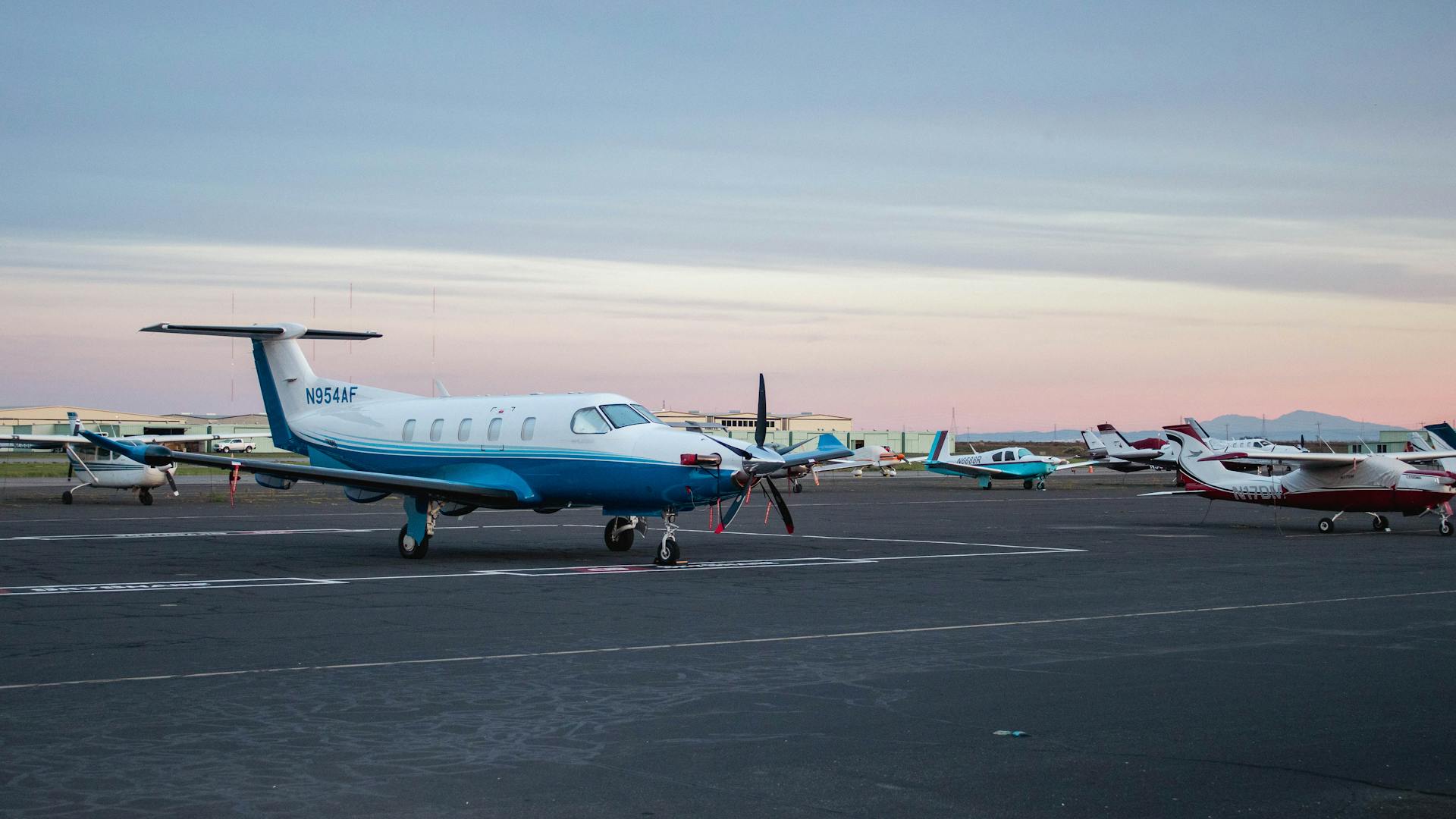
Most wingtip-contact narratives happen at night, in a tight bay, after something interrupted the parking sequence. The geometry that looked fine in daylight gets a few feet smaller after dark.
See how many aircraft fit in your hangar
AirPlx calculates optimized 3D stacking layouts for your exact hangar dimensions.
Run a free layout simulation"The aircraft was supposed to be stopped."
What happens: An aircraft on the ramp begins to roll when nobody expected it to. It rolls forward into the towbar. It rolls back into the tug. It rolls sideways into adjacent equipment. The chocks were placed late, or removed early, or the parking brake was set but didn't hold.
Why it happens: A parked aircraft has fewer eyes on it than a moving one. Everyone in the choreography assumes someone else has the brake. The flight crew assumes ground has chocks in. Ground assumes the cockpit has the brake set. The tug driver assumes the steering bypass pin is pulled. When everyone assumes, the airplane moves.
There's a specific equipment pattern in the data too. Brake accumulator pressure on cold-start single-engine taxi-out. Older airframes losing parking-brake hold pressure. Tugs stalling mid-push. The equipment fails in ways that are usually predictable if anyone is watching for them.
Example: An aircraft completes pushback. The crew sets the parking brake and confirms. The tug operator disconnects the towbar. As the towbar comes free, the aircraft rolls forward several feet. Accumulator pressure had bled off and the brake didn't actually hold. The nose gear contacts the towbar before anyone can react.
"Nobody told the cockpit."
What happens: The flight crew and the ground crew make decisions based on different information. The cockpit thinks the push is clear, ground thinks the cockpit is going to wait. Or the marshaller's signal is misread. Or the headset call never goes through.
Why it happens: Three different people with three different views of the same airplane and no shared protocol for the handoff. The headset is plugged in but not patched through. The hand signal could mean two things. Someone said "wait" and someone heard "OK." Then the aircraft moves.
The data here is overwhelming. Communication breakdown is flagged as a human factor in roughly half of all ground-phase reports — 1,503 out of 3,131. The narratives most often describe a missed or misread call between ground and cockpit during pushback or parking.
Example: During a pushback, the captain asks to be pushed back further. The ground crew responds "to wait," meaning hold position while they reposition. The captain hears something closer to "OK." The aircraft begins to roll forward on top of the towbar before the ground crew can stop it.
"The ramp was already crowded when we got there."
What happens: Vehicles, equipment, or personnel end up in places they shouldn't be when an aircraft is moving. A baggage cart parked in the operations zone. A fuel truck behind a starting jet. People walking across an active ramp to catch a bus. Catering crossing between two parked aircraft when one of them lights its engines.
Why it happens: This is the failure mode that exposes layout, not training. When the staging zones are too small, or the aircraft positions are too close, or the GSE has nowhere to park except in the way, the ramp generates these incidents on its own. Discipline keeps it from getting worse, but it doesn't fix the underlying geometry.
Almost 700 narratives in the dataset mention ground equipment or ground vehicles in conflict with aircraft movement. That's the largest single failure mode by count.
Example: An aircraft starts engines on the ramp for a normal departure. A baggage cart staged behind the aircraft, outside the painted safe zone but only by a few feet, gets caught in the jet blast and moves several feet across the ramp into adjacent equipment. No injuries this time. Different geometry, different outcome.
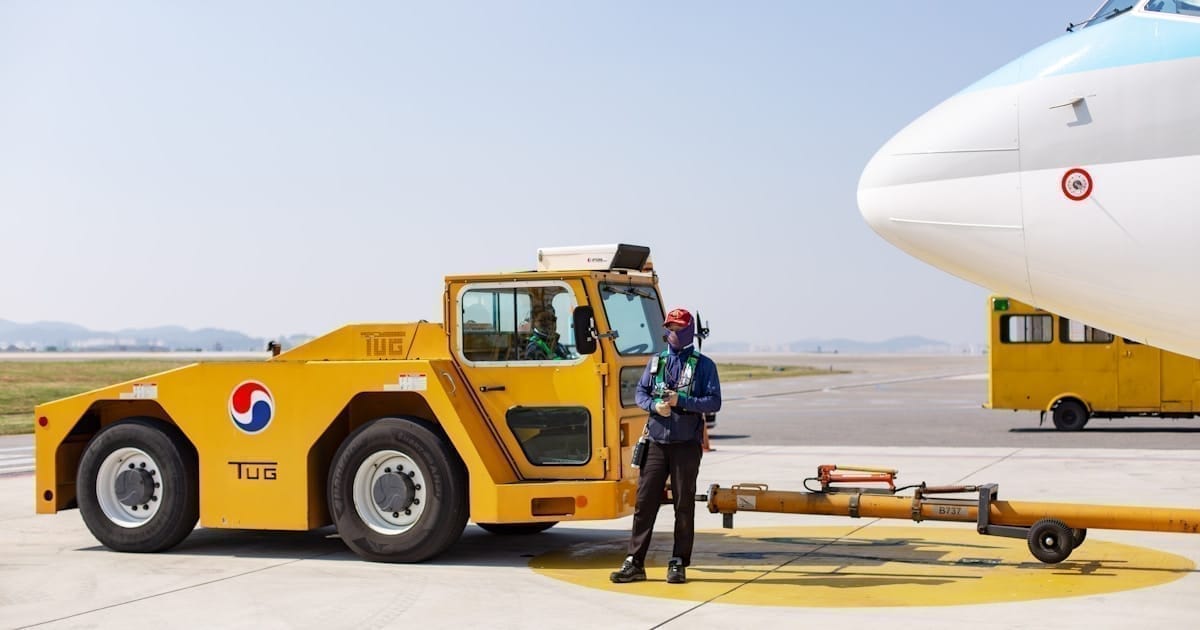
Count the equipment in this frame: a 737 nose, a towbar, a tug, a baggage truck — and one person threading between them. The 700 ground-vehicle conflict narratives in the dataset are mostly stories about one of those elements ending up where another was supposed to be.
"We were already late before we started."
What happens: The crew is rushing, the ramp team is rushing, the tug driver is rushing. Steps get compressed. The chock-out brief is skipped. The walk-around is fast. The pushback callout is abbreviated. Then something small goes wrong and there's no margin to catch it.
Why it happens: Schedule debt. A late inbound, a fueling delay, a paperwork issue, a weather hold. The system absorbs the delay by squeezing the next departure. The ramp turn that's supposed to take 30 minutes gets compressed to 18. Every step still happens, but at speed, with shortcuts, and without the small pauses that catch errors.
Time pressure shows up in over a thousand narratives across the dataset, and as a flagged human factor in 484 ground-phase reports. It's also the factor most likely to be paired with another factor. When the report mentions time pressure, it almost always also mentions communication breakdown or distraction or a skipped step.
Example: A turn that started 25 minutes late. The crew is back from a long sit and trying to make up time. The pushback brief skips the part about ground equipment positions. The ground crew doesn't catch that catering hasn't fully cleared the off-side. The push starts. The catering truck and the wing pass within a few feet of each other. Nothing hits. This time.
The underlying pattern
Read those five back to back and the through-line is obvious.
None of them are about exotic failures. None of them require a perfect storm. They are small margins getting eaten by routine, in environments where the routine is already running hotter than it used to.
Visual misjudgment by a few feet. Brake assumptions that turn out wrong. A handoff that gets garbled. Equipment in the wrong spot. Schedule pressure compressing the steps that catch the other four.
The same five patterns show up across Part 121 commercial reports, Part 91 corporate operations, and Part 135 charters. The aircraft change. The airports change. The patterns don't.
That's the part that should worry you. If these were one-off failures of individual discipline, they'd be distributed randomly. They aren't. They cluster around the same five failure modes, and they cluster regardless of operator. Which means it's not a discipline problem. It's a structural one.
The uncomfortable question
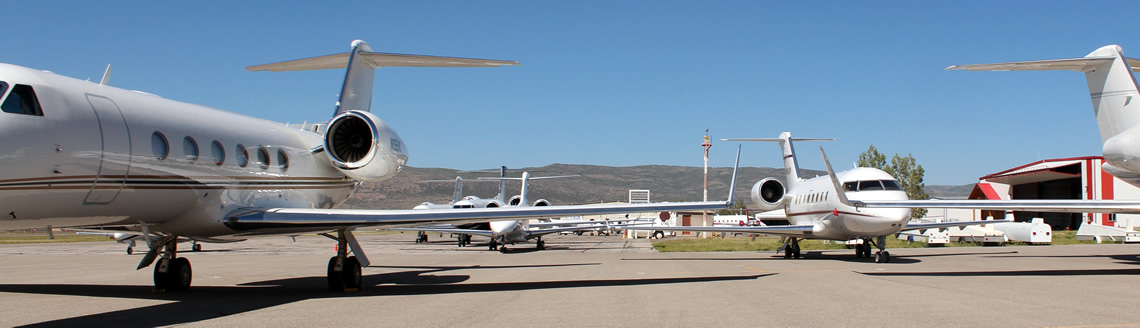
The version of full speed where every step still gets done — and there is still margin left over for the small things. The second look. The third callout. The spotter who actually walks the path.
When was the last time your ramp team had time to do their job at full speed?
Not the version of "full speed" where every step gets done. The version where every step gets done and there's still margin left over for the small things. The second look at the wingtip. The third callout on the brake set. The spotter who actually walks the path.
If the honest answer is "I don't remember," that's not a discipline problem either. That's the same structural problem the data is showing you.
The fix isn't more training. The fix is starting from the assumption that your ramp will get busier, your crews will turn over, and your schedule will tighten. Then changing the shape of the work to compensate before the next number on the trend line.
The trend line, by the way, is going the wrong way. The per-operation ground-accident rate is running about 40 percent above the pre-pandemic baseline.
The five failure modes will still be the same five. Whether they show up on your ramp this quarter is the question worth asking.