What 3,000 Ramp Reports Tell Us About FBO Risk
Published on April 30, 2026 • 8 min read
We wanted to know what actually goes wrong on the ramp. Not what people think goes wrong. Not what the safety briefing says. What the data says.
So we pulled it. Every ASRS report from May 2017 through February 2026. That's 4,969 voluntary near-miss reports filed by pilots, controllers, dispatchers, ground personnel, cabin crew, and maintenance technicians. Then every NTSB ground-phase accident from the same window. 1,075 of them, with damage tiers and narratives.
The patterns are consistent across both datasets. The trend line is the part that should worry you.
63% of reports happen with the wheels on the ground
This is the headline, and most operators get it wrong. Cruise gets the headlines. Taxi gets the bills.
3,131 of the 4,969 ASRS reports are ground phase: taxi, parked, pushback, or ramp. Takeoff, landing, climb, cruise, approach combined make up the other 37%.
ASRS skews toward near-misses because it's voluntary and confidential. That makes the ground-phase concentration even more striking. People are filing these reports because something almost went badly wrong, and the "almost" is happening on the ramp far more than anywhere else.
See how many aircraft fit in your hangar
AirPlx calculates optimized 3D stacking layouts for your exact hangar dimensions.
Run a free layout simulationThe four contributors
Each ASRS report can cite multiple contributing factors. Here's how 3,131 ground-phase reports break down.
Human Factors leads by a factor of two. 2,408 reports flag at least one. Usually situational awareness (1,555), communication breakdown (1,503), or confusion (681). Read those three in order and they're the same story told three ways: someone didn't see what was actually happening, someone didn't say it out loud, or both.
Procedure is second at 1,273, and the surprise is what's inside it. Most of these are not "we didn't have an SOP." Most are "we had one and someone bypassed it because they were behind schedule." That's not a training problem. That's a schedule problem dressed up as a discipline problem, and you cannot drill it out of your team without changing the conditions that produce it.
Airport at 774 is the one that catches operators off guard. The physical airport itself is generating reports. Faded centerlines on the ramp. New LED tower lighting that washes out the older painted markings. Lead-in lines from a previous gate configuration that nobody removed when the gate was repurposed. Hot spots that everyone calls hot for a reason and that nobody has the budget to actually fix. The infrastructure isn't neutral. It's a contributor.
Aircraft at 649 is the equipment side, and it's mostly the same short list of components showing up over and over. Parking-brake accumulators bleeding off on cold-start single-engine taxi-out. Tugs that stall when they're warm. Older airframes losing brake hold pressure. Jet bridges that don't quite sense the aircraft they were calibrated to sense five years ago. None of these fail randomly. They fail in patterns. The equipment is telling you what's going to break next if anyone is reading the reports.
Ten patterns that keep showing up
We ran every narrative and synopsis through a keyword search for the language ramp leads actually use to describe what went wrong. Here's how often each pattern came up.
Ground-vehicle conflicts dominate the count. 699 narratives. Tugs, baggage carts, fuel trucks, deicers, catering, stair trucks. Vehicles where they shouldn't be, vehicles that shouldn't be moving, vehicles whose drivers didn't see the aircraft.
Wingtip and winglet contact (227) and pushback rollaways (226) are nearly tied. They're the co-leaders for property damage. Both happen at near-standstill. Both involve someone assuming wrong about clearance or about whether the aircraft is going to hold position.
Communication callouts missed (163) and distraction (163) are also tied. Almost every narrative in these buckets contains a phrase like "I never heard the call" or "I was on the headset with the captain when..."
Marshaller absent or wing-walker missing (26) is the smallest count, but it's a strong signal because it almost only shows up in the synopsis when something else also went wrong. It's not the kind of thing people report on its own.
A note on the counts: a single report can match multiple patterns. A pushback rollaway report often also mentions communication, time pressure, and a parking brake. The patterns are not mutually exclusive. They cluster.
The damage line
ASRS reports tell you what almost happened. NTSB reports tell you what actually happened, and how badly.
The 1,075 ground accidents in this window involved 1,129 aircraft (some events involve more than one). 778 of those aircraft had a coded damage tier on file; 351 did not. Of the coded ones, 661 were classified as Substantial, 57 as Destroyed, and 60 as Minor.
The shape of this distribution matters. If ramp incidents were mostly fender-benders, you'd see Minor leading. They're not. When something goes wrong on the ramp badly enough to make the NTSB log, it's usually expensive.
Substantial damage on a light jet runs into six figures fast. On a heavy, repair bills routinely cross into the millions. These are the events that make insurance carriers reprice your account.
For ASRS we don't have damage tiers, but we have outcomes. 291 reports list aircraft damaged. 514 list flight cancelled or delayed. 637 list flight crew took evasive action. 314 list returned to gate. None of these are "everything was fine."
The trend
Normalized to activity, the line is unambiguous.
The pre-pandemic baseline ran roughly two ground accidents per million tower operations, with 2019 the cleanest year on record at 1.7. The rate has climbed every year since 2020 — to 2.3 in 2021, holding near 2.4 through 2023, then jumping to 2.8 in 2024 before easing back to 2.5 in 2025.
Tower operations themselves were back to pre-pandemic levels by FY2022 and have kept growing. Ground accidents are growing faster. By 2024 the per-operation rate was running roughly 40 percent above the 2017–2019 baseline.
You can argue with any single year. Nine years moving the same direction is harder to argue with.
Ramps are busier than they were, crews are newer, schedules are tighter. Whatever the industry has been doing for the past five years has not arrested the trend.
The two patterns that dominate damage
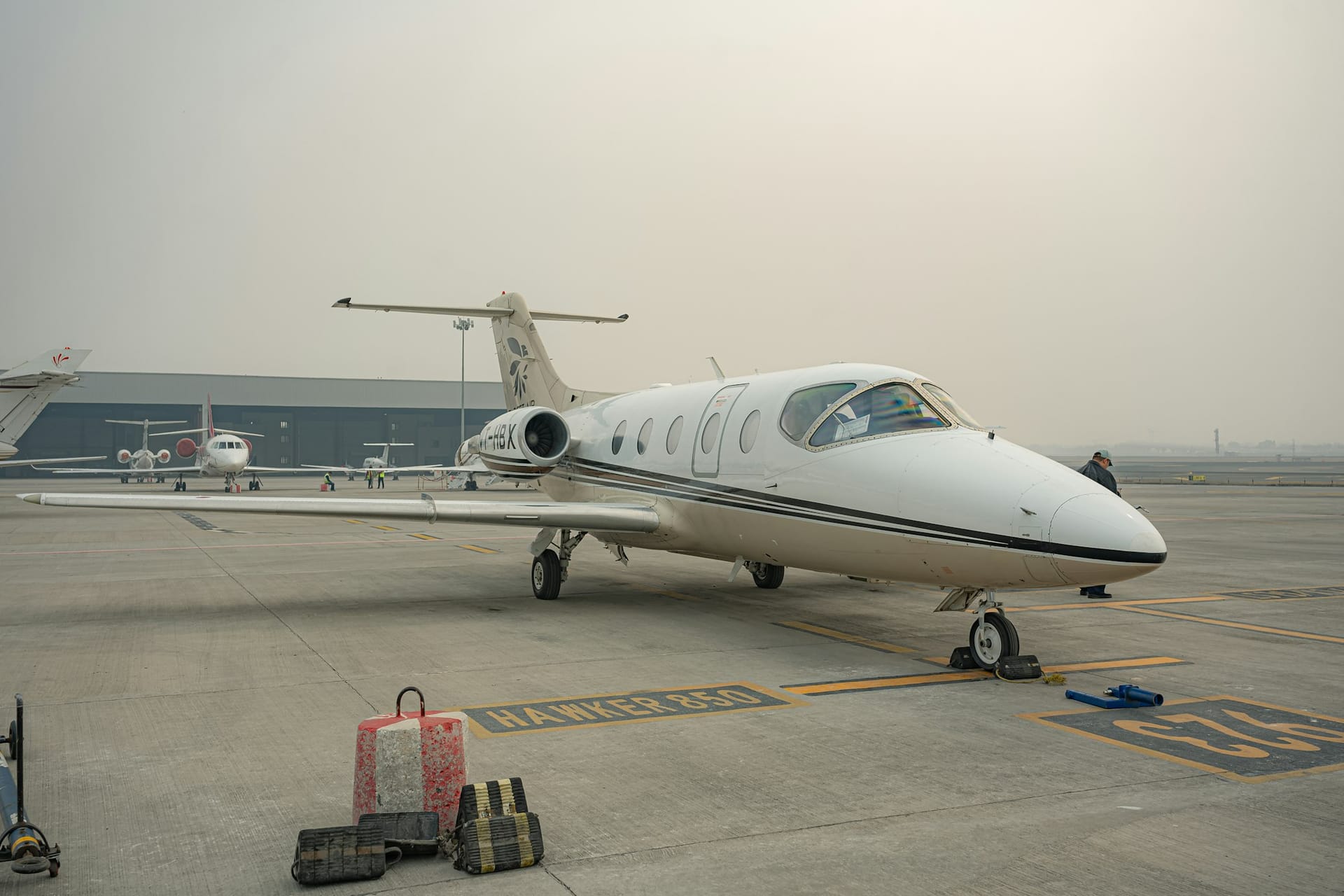
Most of the damage happens at near-standstill. Wingtip into adjacent aircraft, nose gear into towbar, winglet into stair truck. The geometry on a busy ramp is the enabler.
If you stack the failure-mode chart against the NTSB damage-tier chart, two patterns explain most of the damage events.
The first is wingtip and clearance contact. Nearly every wingtip strike narrative reads the same way. The crew or the marshaller misjudged a few feet, often at night, often in a tight bay, often after something interrupted the parking sequence. Lighting and striping are the chronic enablers.
The second is pushback rollaway. The aircraft was supposed to be stopped. The towbar disconnected. The parking brake was set, or thought to be set. Then the aircraft moved a few feet and hit something. Usually the towbar itself, sometimes the tug, sometimes adjacent equipment.
Together these two patterns account for roughly 450 of the narratives we counted. They are also the two patterns that produce the most expensive damage on the NTSB side. Substantial damage on a winglet contact, substantial damage on a nose-gear-into-towbar event.
The uncomfortable conclusion
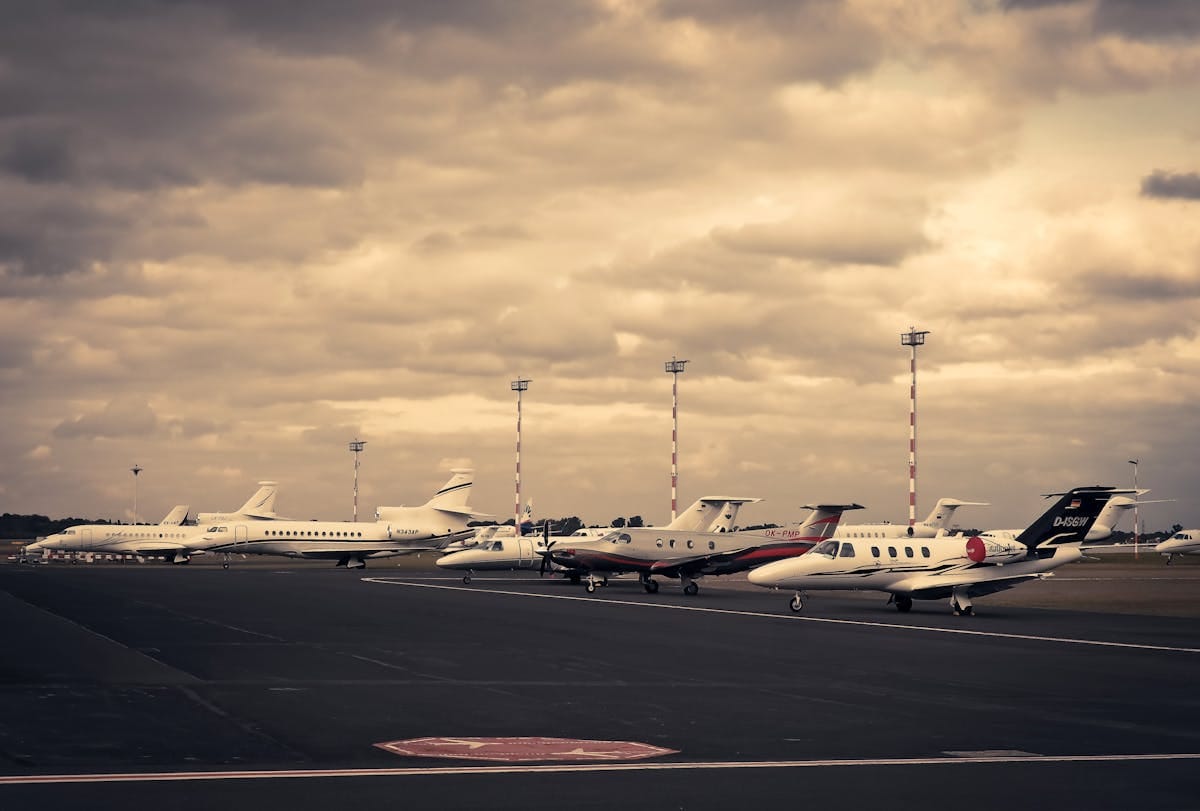
The ramp keeps generating the same incidents because the conditions that produce them haven't changed. Training and discipline run uphill against that current.
Most operators we talk to assume their ramp risk is roughly a function of training and discipline. Hire good people. Drill the SOPs. Discipline the lapses.
The data does not support that view.
The patterns repeat across operators, aircraft types, FAR parts, and airports. The same handful of failure modes show up in Part 121 commercial reports, Part 91 corporate reports, and Part 135 charter reports. The mix shifts. Part 91 dominates the NTSB ground accident count by a wide margin, 624 versus 166 for Part 121. But the patterns are the same.
That's the signal that this is not an individual-discipline problem. It's a system problem. The structure of ramp work at busy facilities is generating these incidents at a fairly steady rate, and the recent volume increase has pushed that rate up.
Training and discipline matter, but they are working against a current. The question worth asking is whether the shape of the work (layout, staffing, schedule, procedures) is fighting that current or going with it.
If you read the companion piece on what actually causes these incidents, you'll see the five recurring failure modes named and explained from the operator's seat. The two posts are meant to be read together.
Method note
ASRS data: full export of the public ASRS Database Online for May 2017 through February 2026, downloaded April 2026. 4,969 reports total. Ground phase defined as any report with Flight Phase containing Taxi, Parked, Pushback, Jet Bridge, Ramp, or Load (3,131 reports). Failure-mode counts are case-insensitive keyword matches over the report synopsis plus narrative; a single report can match multiple patterns.
NTSB data: full export of the avall.mdb accident database, April 2026. Ground-phase accidents identified by Events Sequence rows whose occurrence code matches NTSB ground codes (260 loss of control on ground, 271 collision between aircraft, 310 on-ground collision with object, 320 ground encounter with terrain, 330 ground encounter with weather, 360 propeller blast or jet exhaust, 370 propeller contact to person, 380 roll over). 1,075 events from 2017 onward. Damage tier comes from the NTSB aircraft damage field (None, Minor, Substantial, Destroyed).