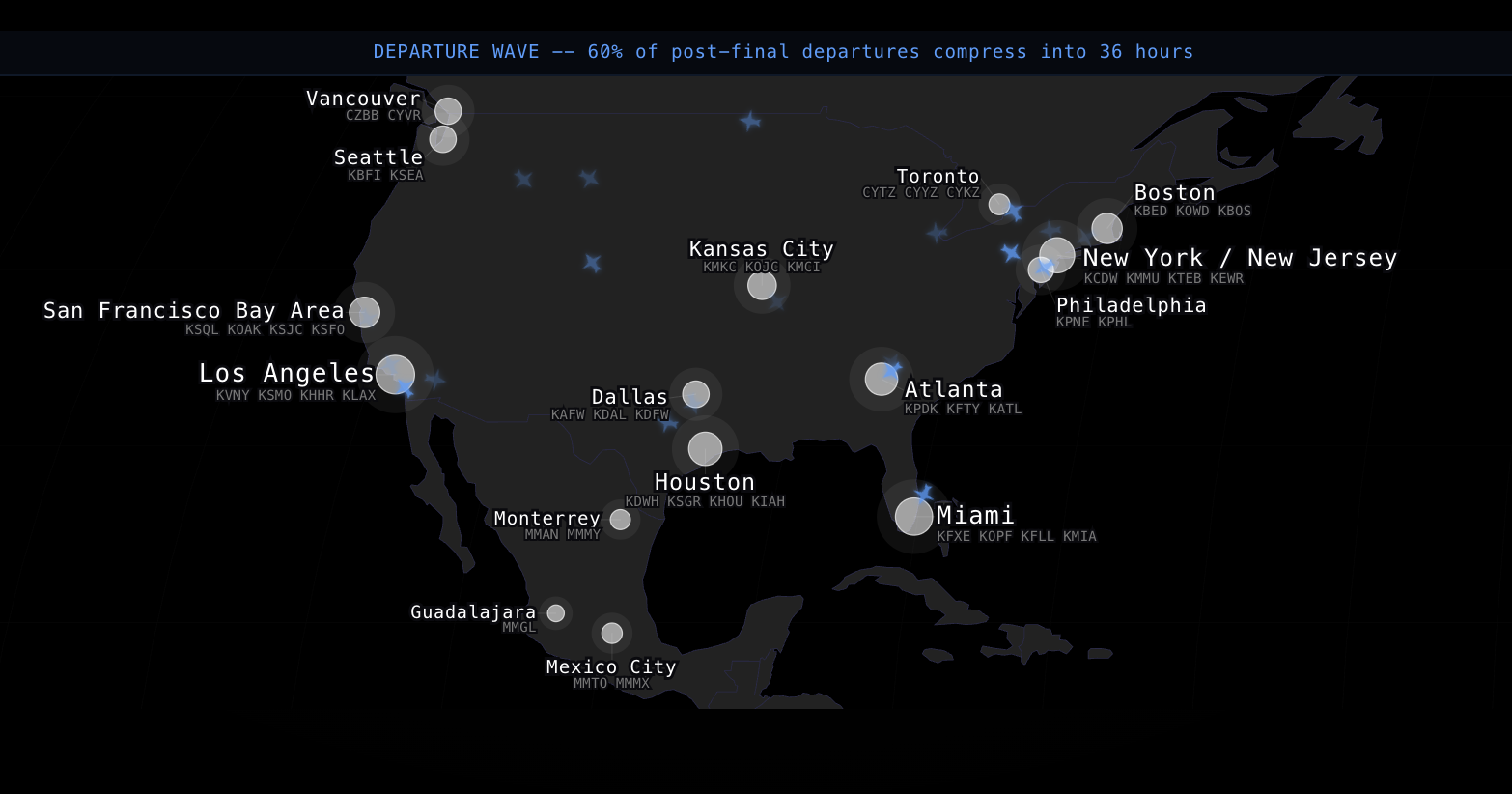
FIFA Friday: When Teterboro Is Full
Published on April 17, 2026 • 4 min read
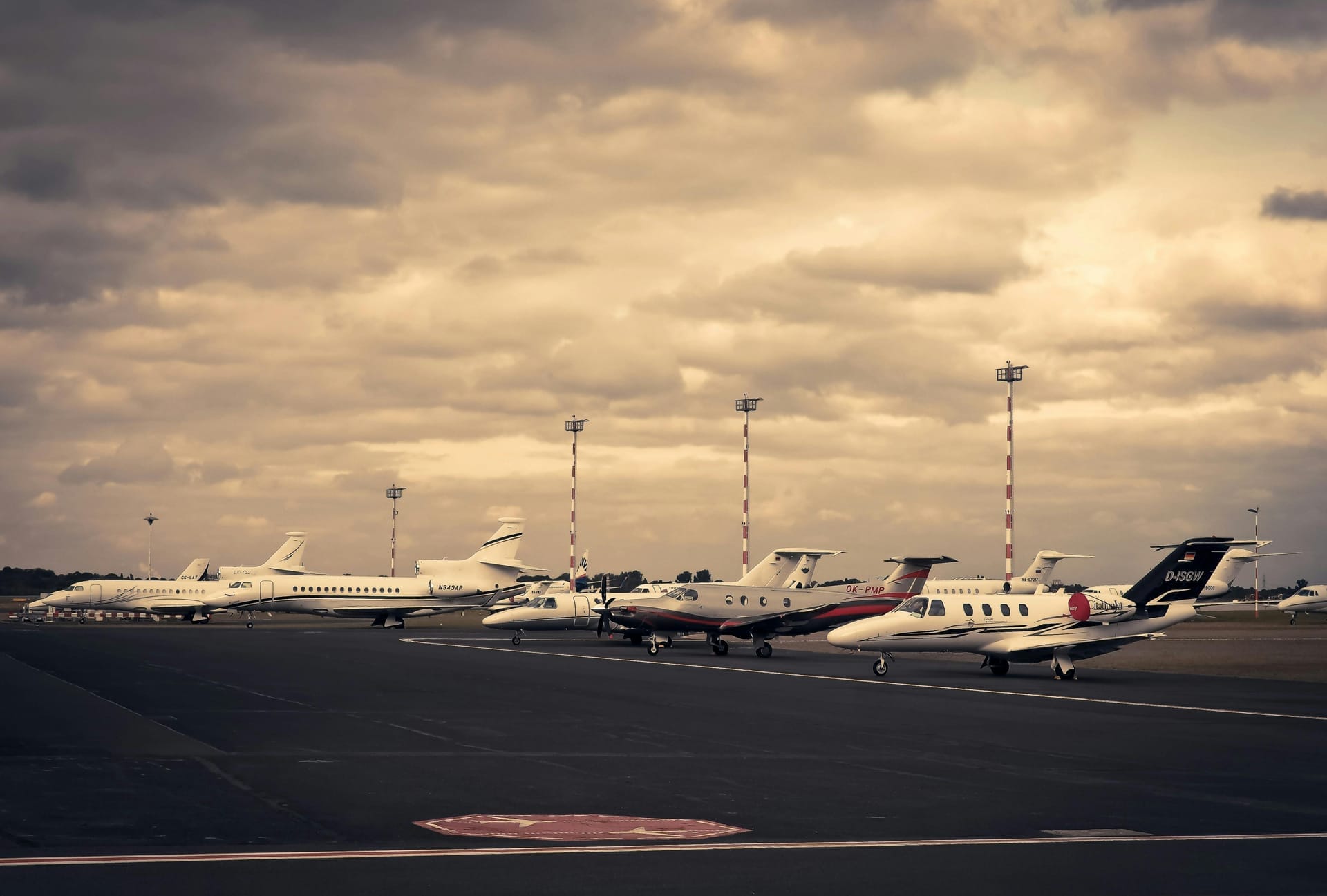
Second in our FIFA Friday series. Each week through the 2026 World Cup, we pull one operational question out of the interactive simulation we built across all 16 host cities. Post #1 was about time, when the departure waves hit. This one is about space, where the aircraft actually go when the primary is full.
Every FBO that has taken a big-event booking call has heard some version of this: "I need a slot at Teterboro that weekend." The answer, for most callers asking about a June or July weekend in 2026, is going to be no.
Primary FBOs fill first. Signature Teterboro, Atlantic Dallas Love, Signature Van Nuys, and their peers at the other host-city fields are already taking calls for World Cup dates. First-come-first-served means the late bookers get told "we can get you into Essex County" or "have you considered Farmingdale?" The flight department usually says yes, because the alternative is a two-hour drive from an airport nobody on the team has used before.
That cascade is where the real operational story of the 2026 World Cup plays out.
The Overflow Fields Are Already Running Hot
Before a single World Cup jet takes off, the overflow fields operators are about to book into are already busy. The 2024-2025 baseline we pulled for US host metros shows six of the most common overflow options running well into triple digits on an average day, with peak days that push the ramps close to their practical limits.
Source: AirPlx baseline from the 2026 simulation dataset, 2024-2025 movements at US host-metro bizav fields
KFRG Republic at Farmingdale and KFXE Fort Lauderdale Executive are both already averaging over 275 movements per day in a normal year. Their peak days clear 400, and KFRG has logged 547 in a single day. Those are days where the ramp is tight, the line crew is stretched, and a missed fuel slot cascades into a 30-minute wait to taxi out.
Now layer a World Cup week on top. If KOPF Opa-Locka fills for a Miami group-stage match and even a quarter of the turned-away operators divert to KFXE, KFXE does not have that many transient stands sitting idle. It does not take a Qatar-sized surge to saturate these fields. It takes the cascade turning on for the first time, for a metro that has never seen its overflow field asked to absorb a primary's runoff.
The Qatar 2022 data hints at the shape of the bite. Most of the business jets that arrived at Doha's overflow field during the tournament had never operated there before. New tail numbers, unfamiliar crews, compressed into a six-week window. Qatar is a small country with only two bizav-capable airports, not a clean analog for the US, but the operational lesson carries: the aircraft that show up at your overflow field are aircraft nobody staffed for.
See how many aircraft fit in your hangar
AirPlx calculates optimized 3D stacking layouts for your exact hangar dimensions.
Run a free layout simulationThe US Version: Teterboro's Overflow Map
Teterboro (KTEB) is the MetLife Stadium field. It runs 24/7 ops, has on-field CBP, and its FBOs hold roughly 250 transient jet spots. When Teterboro fills, four overflow fields are in play, each with a different failure mode.
| Field | Miles to MetLife | Baseline avg / peak day | Transient spots | On-field failure mode |
|---|---|---|---|---|
| KTEB Teterboro | 5 | 97 / 140 | ~250 | (primary) |
| KMMU Morristown | 21 | 109 / 192 | ~100 | Tight ramp, multiple FBOs share transient stands |
| KCDW Essex County (Caldwell) | 13 | 194 / 363 | ~60 | No on-field customs |
| KFRG Republic (Farmingdale) | 40 | 281 / 547 | ~80 | 40-mile drive crosses NYC traffic |
| KHPN Westchester | 22 | 153 / 260 | ~120 | Voluntary 12am to 6:30am quiet-hours program |
Baseline data: AirPlx 2024-2025 movement averages at each field. Transient spots are FBO estimates.
KCDW is the detail that catches late bookers. Essex County sits 13 miles from MetLife, closer than White Plains, but it has no on-field CBP. An international charter that lands at Caldwell cannot clear customs there. The aircraft either pre-clears at a border field or repositions to KTEB or KEWR after the owner steps off. Neither option is what was booked.
KHPN's voluntary quiet hours are the other trap. Westchester operates a Voluntary Restraint From Flying program between midnight and 6:30am every day. Federal preemption under ANCA 1990 makes a true curfew legally difficult, so the program is voluntary on paper. In practice, owners who want a clean noise record and FBOs that quietly bill them for early-morning handling treat it like a curfew. An operator who booked a 5:30am wheels-up out of White Plains to beat the East Coast departure wave is going to find that wheels-up is not free.
It's Not Just New York
Every US metro hosting multiple matches has the same cascade structure. A quick look at the baselines from our simulation data:
| Metro | Primary field | Primary avg/day | Overflow field | Overflow avg/day |
|---|---|---|---|---|
| Dallas / Fort Worth | KDAL Love Field | 73 | KADS Addison | 174 |
| Miami | KOPF Opa-Locka | 148 | KFXE Ft Lauderdale Exec | 275 |
| Los Angeles (SoFi) | KVNY Van Nuys | 348 | KBUR Burbank | 60 |
| Bay Area (Levi's) | KSJC San Jose | 50 | KRHV Reid-Hillview | 190 |
The chart makes the asymmetry obvious. In Dallas, Miami, and the Bay Area, the overflow field already outruns the primary on a normal day. That is not slack capacity sitting there waiting to absorb a World Cup week. That is the overflow field handling its own traffic plus whatever gets turned away from the primary, on top of a baseline that is already higher than the primary's.
Van Nuys is the exception and also the warning. KVNY averages 348 movements per day with a peak day of 471. There is not much slack left before operators start scanning for Burbank, Hawthorne, or Santa Monica, which is still operating but scheduled to close permanently on December 31, 2028 and running tight noise rules in the meantime.
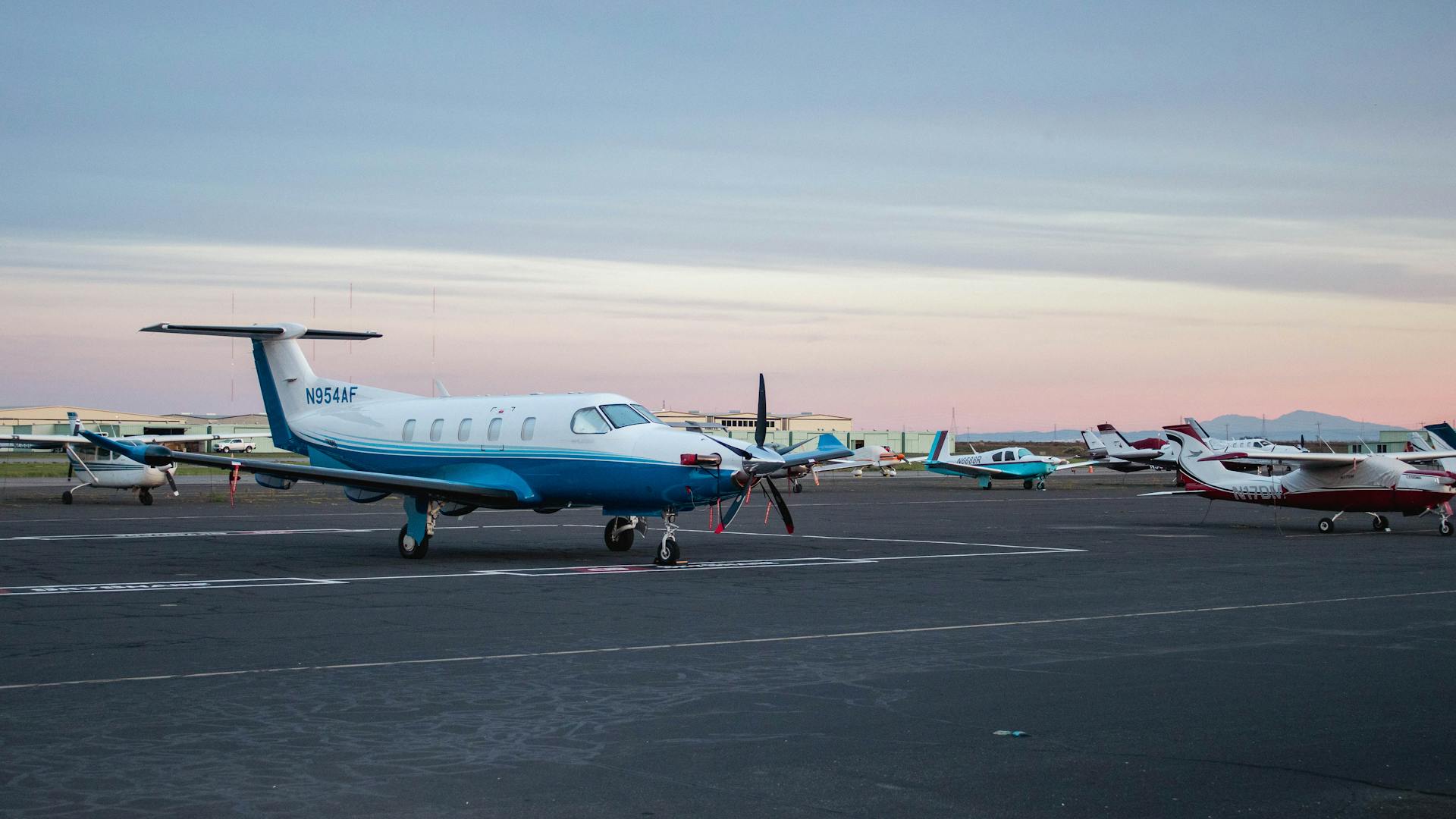
The last hour of dusk is when overflow ramps get tight. Line crews stack for the morning wave, the tugs run short, and the field that looked workable at noon runs out of spots by sundown.
Why Secondary Airports Fill Differently
Operational reality at an overflow field is not a smaller version of the primary. It is a different shape entirely.
- Hangar scarcity: Most secondary fields run hangar waitlists in a normal July. A World Cup July compresses those waitlists to "no, and do not ask."
- Customs hours: KTEB's CBP is on-field and runs wide hours. KCDW has no customs at all. An international charter that ends up at the wrong overflow field burns an extra 45 minutes of ground time before the wheels actually stop moving.
- Line crew depth: Multi-FBO fields like Teterboro have redundancy. A two-FBO field like KCDW does not. A 12-plane morning fueling wave that Teterboro handles in 90 minutes can take three hours at Caldwell.
- Wide-cabin stands: GVs, Globals, and 7500s need specific taxi clearances and tie-down spacing. Not every overflow field has the stand inventory.
The revenue framing: the late-booking operator pays premium special-event fees at the primary, gets turned away, and still pays fees at the overflow. The prepared secondary FBO, the one that knows its exact transient capacity and can quote a hangar stand in 30 seconds, charges primary-grade rates and earns them. The unprepared one loses the owner to a competitor next time.
The question for FBO leadership right now is simple. If your primary field is full by June 1, do you know which overflow airport your customers are about to land at, and do you know whether that field has the hangar stand, the customs window, and the line crew to actually take them?
This is the second post in our FIFA Friday series. The interactive simulation below models bizav traffic across all 16 host cities. Drop in any airport and see what the cascade looks like from your ramp.