The Hidden Event Calendar: When Tiny Airports Get Hammered
Published on January 16, 2026 • 9 min read
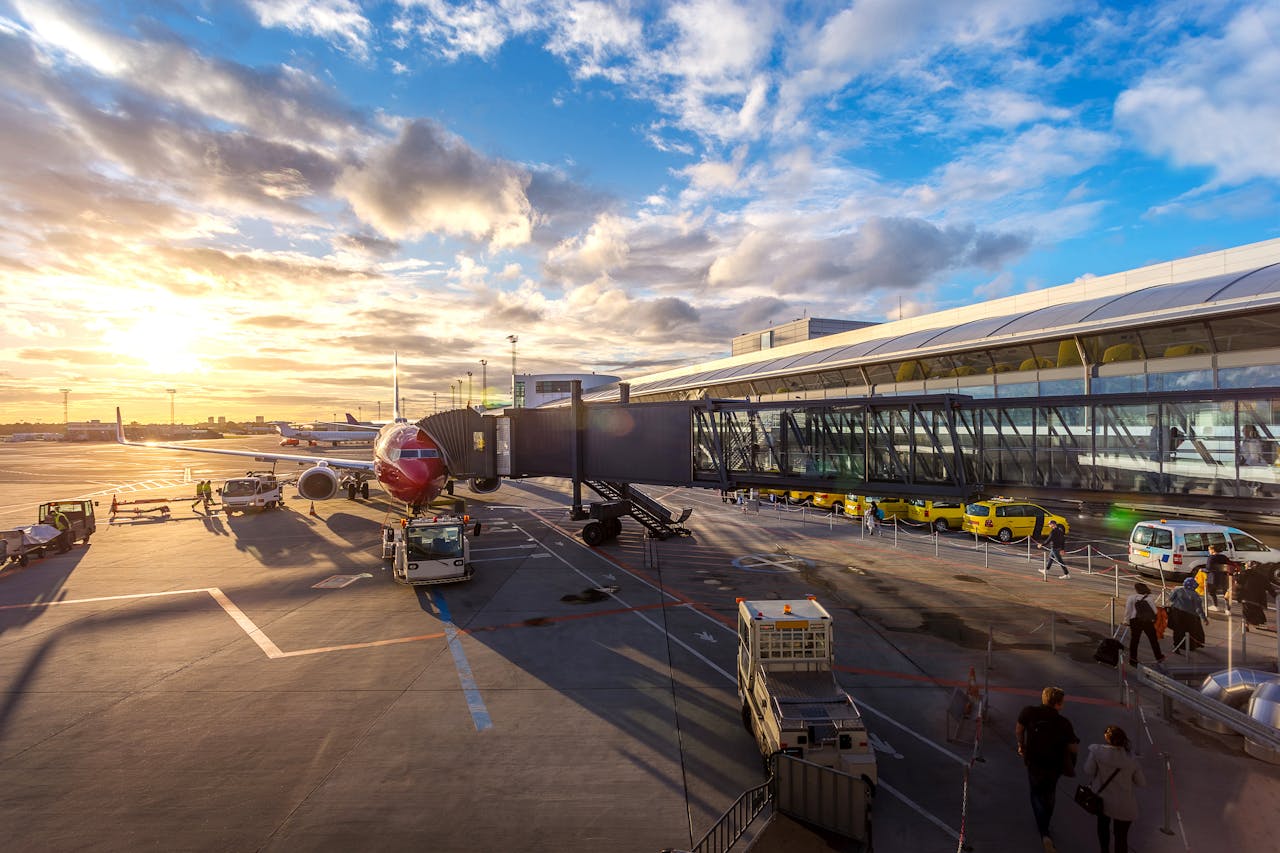
Everyone knows the Super Bowl crushes Las Vegas FBOs. Everyone plans for Masters week in Augusta.
But the events that actually catch operators off guard? They happen at airports that see 3-5 flights on a normal day—then 50+ arrivals in a 48-hour window when some festival, conference, or gathering descends on a small town.
These aren't the headline events. They're the ones where a two-person FBO suddenly needs to handle a ramp full of G650s with no backup plan, no contract staff pipeline, and no overflow airport within 100 miles.
This is the hidden event calendar—the niche gatherings that turn sleepy airfields into temporary chaos.
We built this list by talking to operators at small airports across the country. Not the FBO managers at Teterboro or Van Nuys who have dedicated event teams—the ones running two-person operations in mountain towns who suddenly find themselves coordinating 30 Gulfstreams with a whiteboard and a cell phone.
Their challenges are different. Their solutions have to be different too.
Why Small Airport Events Are Different
Major airports absorb event traffic because they have infrastructure headroom. Henderson Executive handles CES overflow because it's built for volume.
Small airports don't have headroom. They have:
Fixed infrastructure that can't flex:
- Single runway, single taxiway
- 4-6 tiedown spots and maybe one small hangar
- One fuel truck (if any)
- 2-3 staff who also do the books, answer phones, and plow snow
No regional relief valve:
- The next GA airport might be 80+ miles away
- Weather alternates don't exist in mountain terrain
- "Overflow parking" means someone's grass strip
VIP expectations meeting small-town reality:
- Billionaires flying into towns with one restaurant
- Security details with no TSA infrastructure
- Catering requests that require driving 2 hours to fetch
When these airports get hit with event traffic, the normal rules don't apply. You can't rent extra tugs—there aren't any within 200 miles. You can't bring in contract staff overnight—where would they stay?
The FBOs that handle these events well do it through preparation and creativity, not resources.
Small mountain airports operate on thin margins. One unexpected surge can overwhelm everything from fuel supply to parking.
See how many aircraft fit in your hangar
AirPlx calculates optimized 3D stacking layouts for your exact hangar dimensions.
Run a free layout simulationThe Hidden Event Calendar
These events don't make aviation trade publications. But they absolutely hammer the airports that host them.
2026 Quick Reference
| Event | Dates | Airport(s) | Traffic Level |
|---|---|---|---|
| Pebble Beach Pro-Am | Feb 4-8 | MRY | 3-4x normal |
| Aspen Ideas Festival | Jun 21-27 | ASE | 2x winter levels |
| College World Series | Jun 13-24 | MLE | 10x normal |
| Traverse City Film Fest | Jul 28-Aug 2 | TVC, Y88 | 5x normal |
| Allen & Co Sun Valley | Jul 7-11* | SUN | 15x normal |
| Bohemian Grove | Jul 15-31* | STS | Elevated |
| Sun Valley Writers | Aug 16-20 | SUN | 3x normal |
| Telluride Film Festival | Aug 28-31 | TEX | 50x normal |
| Jackson Hole Art Week | Sep 10-20 | JAC | 3x normal |
| Reno Air Races | Sep 16-20 | RTS | 8x normal |
| Chinati Weekend (Marfa) | Oct 9-11 | MRF | 20x normal |
*Dates approximate—these events don't publish schedules
Film Festivals in Tiny Towns
Telluride Film Festival (TEX) — Labor Day Weekend
Telluride Regional Airport sits at 9,078 feet elevation in a box canyon. On a normal September day, it sees 2-3 operations. During the Telluride Film Festival (Thursday before Labor Day through Sunday), it handles 200+ private jet arrivals.
The festival draws Hollywood A-list talent, studio executives, and film buyers—all flying private into an airport with:
- One 7,111-foot runway (density altitude issues at 9,000+ feet)
- Limited ramp space
- No instrument approaches in bad weather
- The nearest alternate (Montrose, MTJ) is 65 miles away
Aircraft that can't get slots at TEX divert to Montrose or Grand Junction (GJT, 125 miles). Some operators position jets at Denver and helicopter passengers in.
Traverse City Film Festival (TVC) — Late July
Michael Moore's festival draws 100,000+ visitors to a northern Michigan town of 15,000. Cherry Capital Airport handles the surge, but the real pressure hits smaller strips: Leelanau County (Y88), Sugar Loaf Resort, and private strips along Grand Traverse Bay.
This overlaps with the National Cherry Festival (early July), creating a two-week stretch where northwest Michigan airports run hot.
Sundance alternatives: Telluride vs. Toronto
Smart operators know that Telluride and Toronto International Film Festival (September) draw overlapping crowds. If you're positioning for film industry traffic, these festivals matter more than Cannes for US-based aviation.

Film festivals in small towns create VIP traffic at airports built for Cessnas. Telluride sees 200+ private jet arrivals over 4 days.
Art & Culture in Unexpected Places
Marfa, Texas (MRF) — Art Season (October-November)
Marfa Municipal Airport has a single 5,612-foot runway in the West Texas desert. Population: 1,700. But Marfa has become an international art destination thanks to the Chinati Foundation and Donald Judd's legacy.
During Marfa's "Open" weekends in October, collectors fly in from New York, Los Angeles, and Europe. The airport that normally sees ranchers and border patrol suddenly handles Citations and Challengers.
Challenges unique to Marfa:
- No jet fuel on field (closest: Midland, 190 miles)
- No FBO services
- Limited ground transportation
- Hotels book 6+ months ahead
Operators flying to Marfa either tanker enough fuel for the round trip or plan a fuel stop at Midland-Odessa (MAF) or El Paso (ELP).
Aspen Ideas Festival (ASE) — Late June
Everyone knows Aspen during ski season. Fewer operators plan for the Aspen Ideas Festival in late June/early July, which brings executives, politicians, and thought leaders to town.
This creates a summer traffic spike that catches operators off-guard because "Aspen is a winter destination." The airport still has the same challenges—7,820-foot elevation, single runway, noise curfews—but in summer rather than winter.
Jackson Hole Art Auctions (JAC) — September
Jackson Hole Airport handles ski traffic, but September brings a different crowd: art collectors for the major Western art auctions. This coincides with the Jackson Hole Wildlife Film Festival and various charity events.
The challenge: September weather is unpredictable. Aircraft that plan VFR arrivals get stuck when smoke from western wildfires or early-season weather moves in. The alternate? Rock Springs (RKS), 177 miles south.
Conferences in Small Towns
Allen & Company Sun Valley Conference (SUN) — Mid-July
This is the "billionaire summer camp" at Friedman Memorial Airport. Sun Valley sees CEOs of the world's largest companies, media moguls, and tech founders—all arriving at an airport with:
- One 6,604-foot runway
- 5,318-foot elevation
- Mountain terrain in all directions
- Limited parking
The conference doesn't publish dates or attendee lists. FBOs find out when security details start arriving. The expectation gap is enormous: passengers worth $50B combined, flying into an airport that can't handle 20 simultaneous large-cabin jets.
Sun Valley Writers Conference (SUN) — August
Two weeks after the Allen & Company conference clears out, the writers' conference brings another wave of private aviation. Different crowd (authors, publishers, literary agents), similar airport constraints.
Bohemian Grove (private strips near Monte Rio, CA) — Mid-July
The most secretive gathering in American business and politics happens in the redwoods north of San Francisco. Attendees fly into Sonoma County (STS), Santa Rosa, or private strips, then drive to the Grove.
No FBO openly markets to this event, but operators in Sonoma County know when the traffic arrives—and what level of discretion is expected.
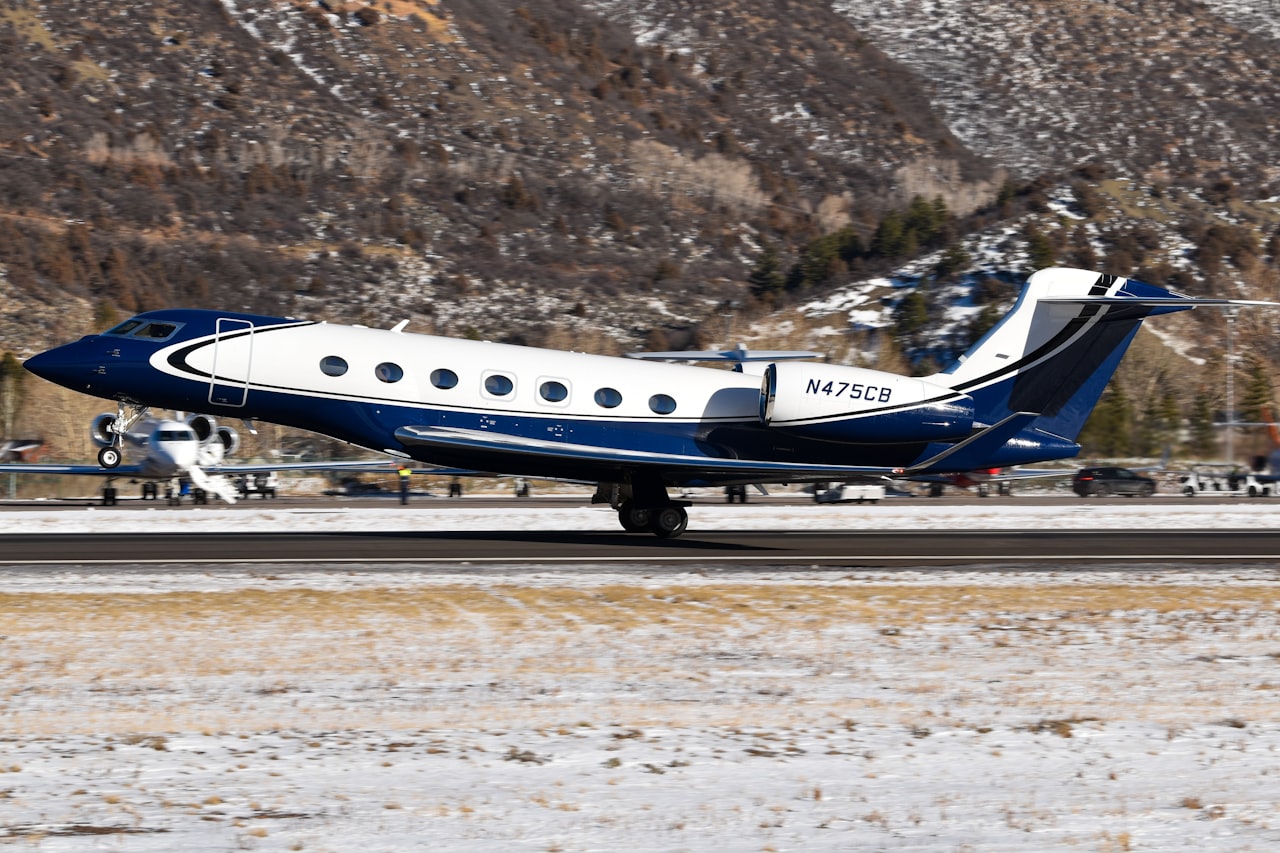
Sun Valley's Friedman Memorial: One runway, mountain terrain, and the world's most powerful executives expecting seamless service.
Sports Events at Tiny Airports
College World Series (MLE) — Mid-June
The College World Series brings baseball fans to Omaha—but the private aviation traffic flows to Millard Airport (MLE), not Eppley Airfield. Millard is a 3,801-foot runway with no control tower, handling university athletic departments, donors, and families.
For two weeks, this small airport north of Omaha sees traffic that would be normal at a regional hub.
Reno Air Races (RTS) — Mid-September
Reno-Stead Airport hosts the National Championship Air Races—the fastest motorsport on Earth. Unlike EAA AirVenture, which spreads aviation enthusiasts across a week, Reno concentrates race-specific traffic into 4-5 days.
The unique challenge: mixed traffic of vintage warbirds, race planes, and corporate jets. A P-51 Mustang and a Global 7500 have very different approach speeds.
Pebble Beach Pro-Am (MRY) — February
Monterey Regional handles Pebble Beach traffic—but this isn't just the Concours in August. The AT&T Pebble Beach Pro-Am in February brings celebrity-amateur teams to the courses. It's a quieter surge than car week, but still 3-4x normal February traffic for an airport that's typically slow in winter.
Seasonal Island Surges
Nantucket & Martha's Vineyard (ACK, MVY) — Summer Peak
Nantucket Memorial and Martha's Vineyard airports handle predictable summer traffic—but specific weekends create compression events:
- Fourth of July weekend
- Boston Pops concert on Nantucket (August)
- Vineyard Cup regatta (August)
- Labor Day exodus
These airports have operational quirks that mainland pilots don't expect: noise-sensitive approaches, fog that rolls in without warning, and summer weight restrictions due to density altitude.
Mackinac Island Area (MCD, PLN) — Grand Hotel Events
Michigan's Mackinac Island has no airport (no cars either), but airports around the Straits of Mackinac—Mackinac Island (MCD on the mainland), Pellston (PLN), and St. Ignace (83D)—handle traffic for Grand Hotel events, the Mackinac Policy Conference, and the Chicago-Mackinac yacht race.
Pellston Regional (PLN) is the primary reliever, but it's a 3,600-foot runway in northern Michigan with limited services.
Sea Island, Georgia (SSI) — Corporate Retreats
Malcolm McKinnon Airport on St. Simons Island handles traffic for The Cloister at Sea Island—one of America's most exclusive resorts. Corporate retreats, board meetings, and family gatherings bring steady private aviation.
Unlike seasonal destinations, Sea Island runs year-round. The challenge is consistency: this airport needs to deliver white-glove service 52 weeks a year with small-town infrastructure.

Island airports handle VIP expectations with limited infrastructure. No alternates, weather sensitivity, and passengers who don't understand why their jet can't land in fog.
Mountain Town Ski Overflow
The major ski airports (ASE, EGE, JAC) get all the attention. But overflow traffic hits smaller strips that aren't built for it:
Driggs, Idaho (DIJ) — Teton Overflow
When Jackson Hole fills up or weather closes JAC, Driggs-Reed Memorial becomes the alternate. It's a 7,300-foot runway on the Idaho side of the Tetons—high elevation, mountain terrain, and limited services.
Operators who plan Driggs as a casual backup don't realize it has no deicing, no hangar space, and challenging approach procedures.
Rifle, Colorado (RIL) — Aspen Overflow
Rifle Garfield County Airport sits 60 miles from Aspen at a more manageable 5,548 feet. When Aspen hits capacity or weather limits operations, Rifle handles the overflow.
The catch: there's essentially no FBO infrastructure. This is overflow parking, not full-service handling.
Steamboat Springs (HDN) — Bob Adams Field
Yampa Valley Regional (HDN) handles Steamboat traffic, but Bob Adams Field (SBS) is the local alternative. A 4,452-foot runway at 6,882 feet elevation—tight for jets, but some operators try it anyway.
What To Do With This Information
If your airport is on this list, you already know these weeks are different. The question is whether you're reacting or preparing.
A few things worth thinking about:
Know your actual capacity. Not your theoretical capacity—your real capacity when 70% of arrivals are large-cabin jets that need to leave Sunday morning. Most small airports have never mapped this out. They just know it gets tight.
Fuel is usually the first constraint. At small airports, fuel delivery lead times can be 3-5 days. If you're ordering extra fuel the week of the event, you're already behind.
The departure crunch is worse than arrivals. Everyone spreads out on the way in. Everyone wants to leave at the same time. If you're not thinking about departure sequencing when aircraft arrive, Sunday morning becomes a parking lot.
Reputation compounds. At a small airport, turning away the wrong aircraft gets remembered. The owner talks to other owners. You either become the place that handles event weekends well, or the place that doesn't. There's not much middle ground.
None of this requires fancy software. A whiteboard, a spreadsheet, and thinking through the departure sequence before the first arrival will get you most of the way there.
That said—if you want to model event scenarios before they happen, that's what we built AirPlx for. AutoPark shows you exactly where each aircraft fits, flags departure conflicts before you commit to a position, and lets you test "what if the G650 arriving Thursday needs to leave before the Challenger on Sunday" without moving anything on the ramp.
See how it works or run the numbers on your hangar.
Related Reading
- The 2026 US GA Event Calendar: When Ramps Actually Break
- Planning for High-Traffic Event Weekends at FBOs
Know an event we missed? Drop us a line.
Related Articles



Start AutoStacking
See how AirPlx plans, parks, and predicts your ramp moves in one place
 Copyright 2024, AirPlx, Inc.